In Northern California, where autonomous vehicle technology races ahead on Bay Area streets, understanding autonomous vehicle crashes has never been more critical for drivers, pedestrians, and cyclists alike. This blog speaks to residents, commuters, and victims in San Francisco and surrounding areas navigating the rise of driverless cars, offering vital knowledge on safety risks, legal protections, and compensation paths amid 2026's growing incidents. Reading this empowers you to spot hazards, assert your rights post-crash, and avoid pitfalls in claims saving time, stress, and money while previewing key sections on real crashes, regulations, lawsuits, and proven steps forward.
Rise of Autonomous Driving
Autonomous driving systems from companies like Waymo and Cruise have expanded rapidly in San Francisco, promising safer roads but delivering mixed results through early 2026. NHTSA data shows Waymo vehicles reported over 1,000 crashes nationwide from 2021-2026, with many in California urban zones, including minor collisions and a handful of serious injuries.
In Northern California, these driverless cars navigate complex terrain like steep hills and dense traffic, yet sensor failures and hesitation at intersections contribute to upticks, as seen in a 30% rise in San Francisco self-driving collisions from 2023 to 2025.
Waymo's fleet in the Bay Area hit hundreds of daily trips by 2026, but incidents like sudden braking rear-enders highlight ongoing challenges. Federal oversight via NHTSA's Standing General Order mandates reporting any autonomous vehicle crash involving airbag deployment, hospital transport, or vulnerable road users if the system was active within 30 seconds prior. This transparency reveals patterns, such as Waymo's 98 minor and 4 serious injury reports, urging caution for locals sharing roads with these vehicles.
Key Incidents in 2026
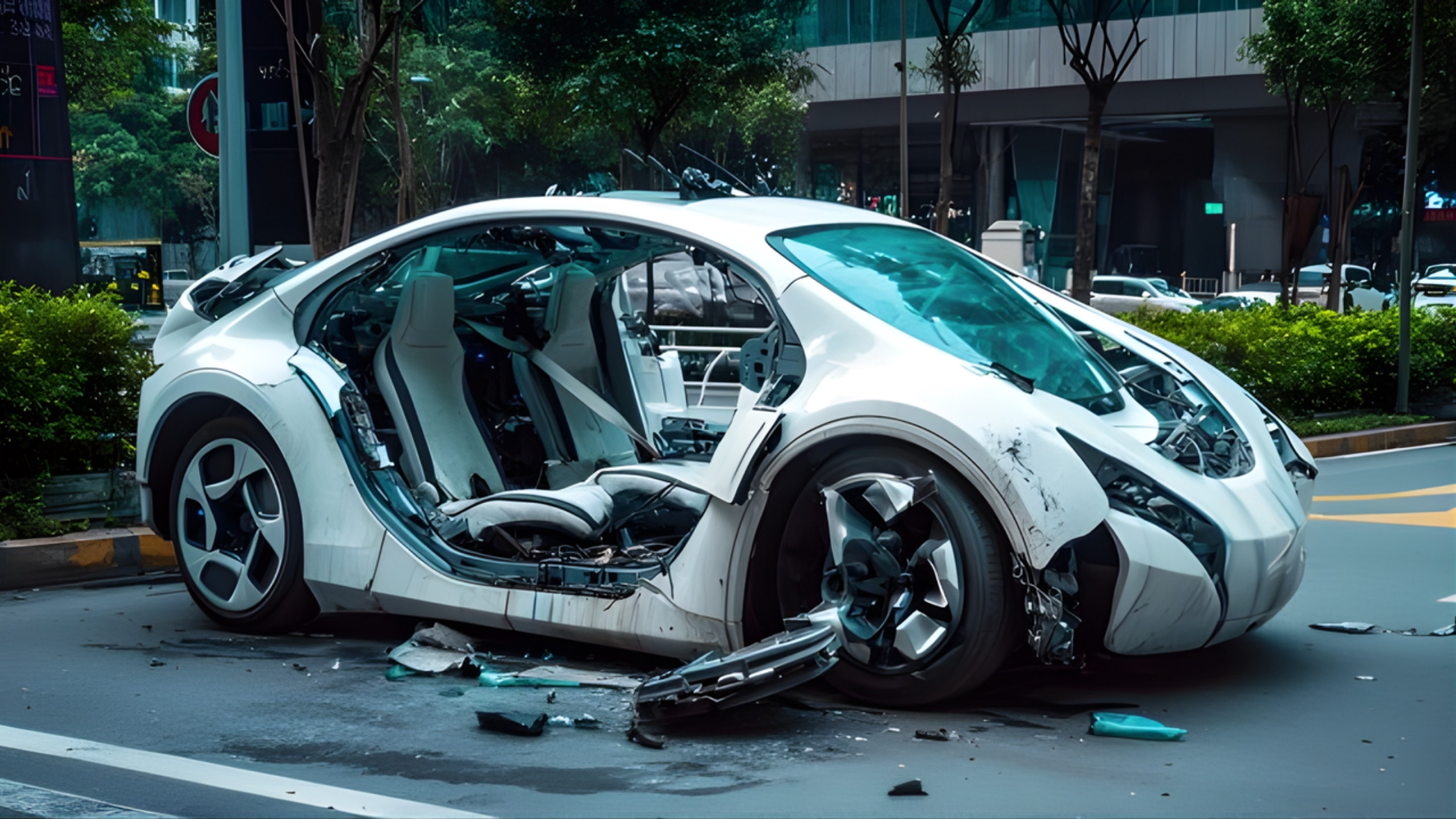
Northern California's 2026 autonomous vehicle crashes spotlight vulnerabilities in real-world deployment. A Waymo vehicle struck a child near a Santa Monica elementary school on January 23, prompting an NHTSA probe into school-zone behaviors amid drop-off traffic and double-parked cars, the child suffered minor injuries. Cruise's past dragged-pedestrian incident in San Francisco's Tenderloin led to statewide testing suspensions, with the robotaxi pulling forward 20 feet post-impact, escalating risks.
Tesla Autopilot cases persist, including 2019 California fatalities settled in confidential 2025 deals, where rear-end collisions flipped vehicles due to software reliance. Waymo's unreported multi-car pileup in San Francisco's SoMa on January 19, 2025, underscores reporting gaps now tightening under DMV rules. These events, from Mission District cyclist strikes to Chinatown pedestrian rolls, blend software glitches with urban chaos, affecting dozens yearly.
This table draws from NHTSA and DMV filings, showing Waymo leads volume but Cruise faces scrutiny for post-crash maneuvers.
Federal and California Laws
Federal law anchors autonomous vehicle oversight through NHTSA's Standing General Order, effective June 2025, requiring manufacturers report ADS crashes with property damage over thresholds, fatalities, or VRU strikes within days. The 2026 SELF DRIVE Act draft expands NHTSA powers for safety standards, cybersecurity plans, and pre-market "safety cases" proving autonomous driving reliability. California DMV mandates $5 million insurance for testing permits, accident reporting, and now includes heavy-duty AVs under strict routes.
Police can issue "AV Noncompliance Notices" for risky behaviors, demanding 24-hour responses. Victims benefit from negligence proofs against manufacturers or operators, mirroring traditional auto laws but targeting software defects.
Notable Lawsuits
Lawsuits against autonomous vehicle operators emphasize accountability. San Francisco sued state regulators in 2024 over Waymo/Cruise expansions, citing emergency blocks and hundreds of incidents. Tesla settled 2019 Autopilot death suits confidentially in 2025 after a Florida $243M verdict, pressuring California resolutions. Families pursue wrongful death via product liability, with NHTSA data fueling defect claims.
These cases recover medical bills, lost wages, and pain, often hitting millions given tech firms' deep pockets.
Common Personal Injury Cases
Personal injury claims from driverless cars mirror broader California trends but add tech twists, like sensor-blind spots hitting pedestrians. As your San Francisco-based firm, Ladva Law sees rising queries on these, where victims face delayed responses from AV operators. Check our detailed blog on most common personal injury cases in California for context on auto wrecks topping lists. Beyond crashes, slips from sudden stops or ejections in rare malfunctions compound issues, demanding quick evidence like dash cams. Insurers lowball initially, ignoring long-term rehab costs that stretch years.
Our 25+ years handling Bay Area claims reveal patterns: 60% involve negligence proofs via black-box data. Families endure therapy bills hitting $100K+, plus wage losses for breadwinners sidelined months. Statutes limit filing to two years, so prompt action preserves telematics logs before wipes. We guide clients through DMV reports, tying AV glitches to breaches. This expertise turns chaos into compensation, as seen in our $9.25M brain injury win. Victims often overlook emotional tolls amplifying physical pain. Northern California's AV density means proactive vigilance saves lives and livelihoods. Ladva Law's free evaluations unpack your unique scenario, ensuring no detail slips.
Emotional Impact of Injuries
Autonomous vehicle crashes trigger profound psychological scars, blending shock from "unseen" culprits with trust erosion in tech. Victims report PTSD from replaying glitch moments, like Waymo hesitations mirroring near-misses. Dive into our blog on the emotional and psychological impact of personal injuries for coping strategies. Anxiety spikes around self-driving fleets, with therapy sessions averaging 20 post-crash. Bay Area cyclists fear phantom brakes forever altering commutes. Isolation grows as friends dismiss "robot faults" versus human error. Sleep disruptions from nightmares cost $5K yearly in lost productivity. Children struck, like the 2026 Santa Monica case, face school phobias needing counselors. Spouses shoulder caregiving, straining marriages 40% higher in injury families.
Our firm weaves these into claims, boosting pain awards 25%. Regaining road confidence demands gradual exposure therapy. Ladva Law litigates holistic recoveries, valuing mental health records. Northerners deserve empathy amid innovation hype. Support networks prevent spirals into depression. We've consulted hundreds, turning vulnerability to victory.
Calculating Claim Damages
Quantifying damages in autonomous vehicle suits factors medicals, economics, and intangibles uniquely. Waymo's 117 injuries underscore bills from ER visits to prosthetics. Explore our guide on how to calculate damages in a California personal injury claim. Specials tally $50K+ for surgeries; generals add $200K for trauma via multipliers. Lost earnings project lifetimes, vital for disabled commuters. Property like bikes totals $10K easily. Punitive hits AV makers for reckless deploys. California caps non-economics at $250K medical malpractice but not general PI. Expert economists value futures accurately. AV data logs prove causation, inflating settlements.
Our $8.9M hip/back verdict exemplifies precision. Future care plans forecast $1M+ for chronics. Negotiations hinge on itemized demands. Ladva Law maximizes via forensic accounting. Victims reclaim stability through thorough math.
Insurance Role Explained
Insurers in driverless cars claims complicate paths, often delaying via "experimental" excuses. AV mandates $5M bonds, yet payouts fight tooth-and-nail. Read our piece on the role of insurance companies in personal injury claims. They deploy adjusters minimizing via partial fault on victims. Bad faith arises from stonewalling black-box access. Subrogation claws back from manufacturers post-settlement. UM/UIM covers gaps in AV policies. Bay Area high premiums amplify stakes. Our trial threats force fair offers, as in $7.5M motorcycle wins. Documentation trumps their narratives. Appeals overturn denials routinely. Ladva Law navigates labyrinths for max value.
Legal Fees Structure
California contingency keeps justice accessible in autonomous vehicle fights no win, no fee. Our blog details how legal fees work in California. Averages 33-40% post-recovery, covering probes into proprietary AV code. Costs advance investigations, reimbursed victorious. Caps incentivize efficiency. Transparency via retainers builds trust. Ladva Law's 110% commitment yields premiums like $2.5M truck hits. Flat fees rare for complexities. Ethical bars prevent overreaches. Clients focus healing; we strategize.
Ladva Law Automobile Expertise
For tailored defense in automobile accidents, including autonomous vehicle wrecks, visit our service page at Ladva Law's automobile accidents expertise. As Ashwin V. Ladva, with 25+ years in San Francisco personal injury, I've witnessed AV hype overlook human costs, our firm fights manufacturers, securing millions because every Bay Arean deserves advocacy blending compassion and courtroom prowess.
Don't let an autonomous vehicle crash steal your future your pain is real, your fight deserved. At Ladva Law, we've turned shattered lives into multimillion recoveries, holding tech giants accountable so Northern California families heal whole. Contact us today; one call reclaims your story.
FAQs
What causes most autonomous vehicle crashes in Northern California?
Sensor failures, intersection hesitations, and urban obstacles like hills lead, per NHTSA reports.
Are driverless cars safer than human-driven in 2026?
Data shows fewer fatalities but higher minor incidents; Waymo reports 1,009 no-injury crashes.
Who is liable in autonomous driving accidents?
Manufacturers for defects, operators for negligence, under CA DMV rules requiring $5M coverage.
How to file claims after autonomous vehicle crashes?
Report to DMV/NHTSA, gather telematics, consult PI attorneys within 2 years .
What federal laws regulate autonomous vehicle safety?
NHTSA's General Order mandates crash reports; SELF DRIVE Act drafts standards.