

Call us Now For Your Free Consultation!
+1 415-296-8844

How CT and MRI Scans Strengthen a Traumatic Brain Injury Case

June 25, 2026
x.com
facebook
linKedin
Instagram

A traumatic brain injury can change a person’s life in an instant, but the hardest part for many victims is proving what happened when symptoms are invisible or delayed. This article is important for crash victims, families, and anyone in the personal injury field because it explains how medical imaging can help establish the severity of a head injury, support a legal claim, and protect a victim’s right to compensation. If you are searching for CT scan traumatic brain injury evidence or want to understand MRI vs CT traumatic brain injury in a lawsuit, this guide will show you how these scans work, what they can reveal, why timing matters, and how the results may affect settlement value and courtroom strategy.

Why Brain Imaging Matters in TBI Claims

Traumatic brain injury cases are often difficult because symptoms do not always appear immediately. A person may walk away from a crash, speak normally at the scene, and still suffer a serious brain injury that becomes obvious only later. That is why imaging studies such as CT scans and MRIs are so important in both medicine and litigation.

In personal injury law, the right imaging can help connect the crash to the diagnosis. It can also help show whether the injury is acute, chronic, mild, moderate, or severe. In a claim involving head trauma, medical records often become some of the strongest evidence available to prove damages. For readers wanting a deeper legal overview of this injury category, our main page on traumatic brain injury provides a broader explanation of the condition and its impact on claims.

CT vs. MRI in a TBI Case

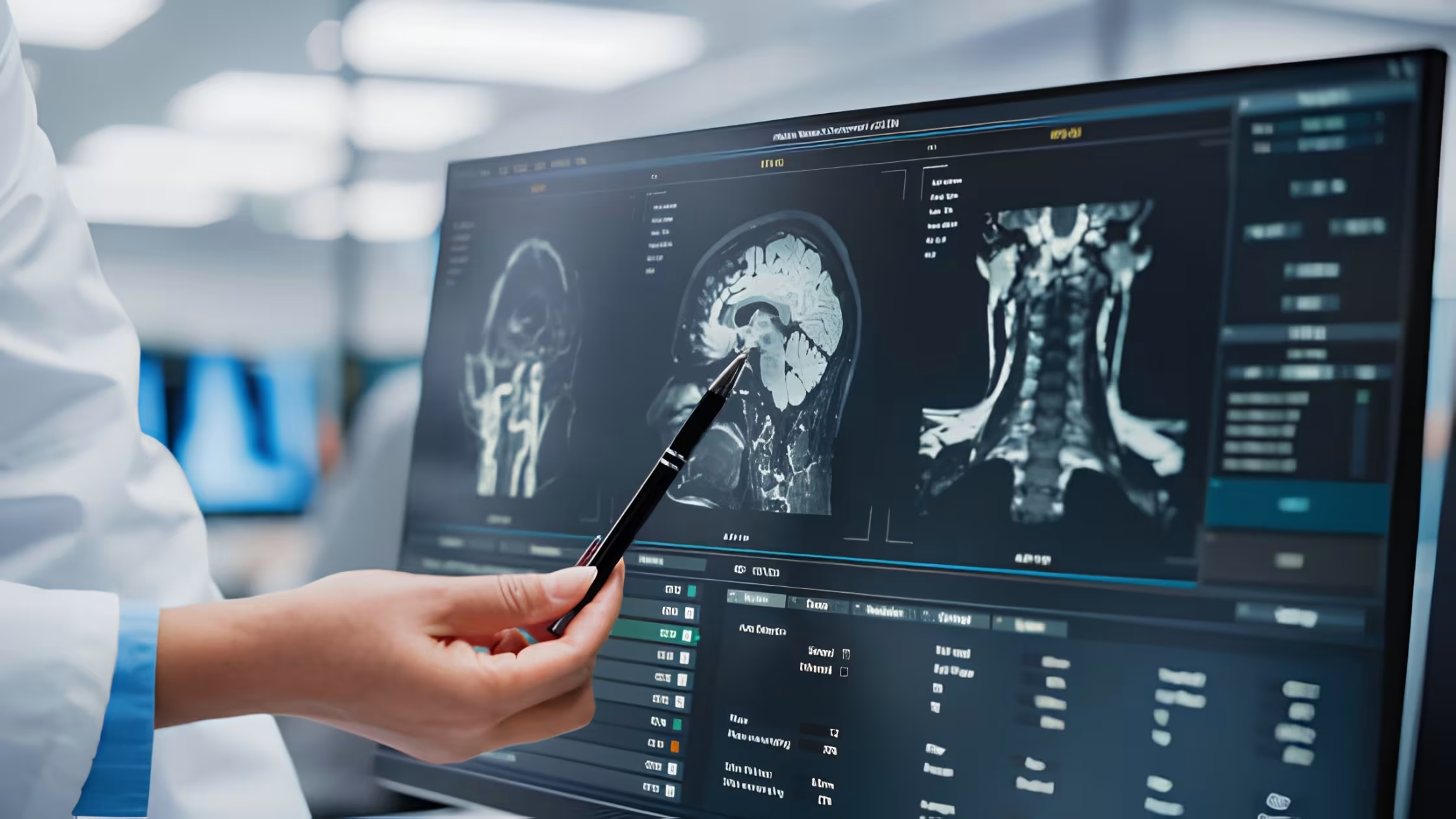
A CT scan is usually the first imaging test used after a suspected brain injury because it is fast and widely available. It is especially useful for detecting bleeding, skull fractures, swelling, and other emergency conditions. MRI, on the other hand, often provides more detailed images of brain tissue and may detect injuries that do not appear on CT.

This is why both tests can matter in litigation. A CT may confirm a serious emergency injury right after the crash, while an MRI may later reveal deeper damage that explains memory loss, headaches, dizziness, or cognitive problems. In other words, each scan tells part of the story.

Does CT Show Brain Injury

One of the most common client questions is whether does CT show brain injury in every case. The answer is no, not always. A CT scan can reveal certain injuries very well, especially bleeding, fractures, and swelling, but it may miss subtle or microscopic brain damage.

That is why a normal CT scan does not automatically mean the person is fine. Some victims with post-concussion symptoms, cognitive issues, or persistent headaches may still have a real brain injury even if the first scan appears normal. This point is critical in litigation because insurance companies sometimes use a negative CT to argue that the injury is minor.

Why MRI Evidence Helps a Lawsuit

MRI is often more sensitive than CT for certain types of brain damage, especially when symptoms continue after the initial emergency phase. In a claim, MRI brain injury lawsuit evidence can help show structural changes, bleeding not seen on CT, or injury patterns consistent with trauma. That can strengthen both liability and damages arguments.

If an MRI is performed after the crash and shows abnormalities, it may support the claim that the symptoms are medically real and directly tied to the accident. This can be especially helpful in disputes involving concussion, post-concussion syndrome, diffuse axonal injury, or lingering neurological complaints. For victims, that evidence can make the difference between a denied claim and a meaningful recovery.

Timing and Medical Strategy

Timing matters a great deal. A CT scan is often done in the emergency room immediately after the injury, while an MRI may be ordered later if symptoms continue. That sequence helps doctors rule out emergencies first and then look deeper for hidden injury.

If a person is involved in a crash in California, an MRI after car accident California may become especially important if headaches, dizziness, memory problems, or mood changes persist after the initial hospital visit. The goal is not just diagnosis; it is also creating a clear medical record that can be used in a claim or lawsuit. The more consistent the medical documentation, the stronger the case tends to be.

Medical Imaging and Federal Rules

While medical imaging itself is governed by medical standards, TBI claims often overlap with federal and state legal issues depending on the crash type. In commercial vehicle cases, federal safety rules may affect how liability is proven if the injury happened in a truck collision. In all serious injury cases, attorneys also rely on record preservation, expert interpretation, and the admissibility of medical evidence under evidentiary rules.

For victims of traumatic brain injury, imaging results often become part of a larger damages narrative that includes lost wages, future treatment, pain, and reduced quality of life. A scan alone does not win a case, but it can provide powerful proof when combined with physician testimony, symptom history, and expert opinions. If you are researching related legal issues, you may also find our article on car accident brain injury lawsuits in California useful.

Example

Imagine a driver is rear-ended at a stoplight and initially believes the injury is only whiplash. The emergency room orders a CT scan, which does not show bleeding. A few weeks later, the victim develops severe headaches, memory lapses, and concentration problems. An MRI then reveals findings consistent with brain trauma.

That sequence can be important in a lawsuit because it shows that the injury was not imaginary or exaggerated. It also demonstrates why early medical care and follow-up imaging matter so much after a collision.

How Imaging Affects Settlement Value

Brain injury claims are often valued based on the seriousness of the diagnosis, length of treatment, permanency of symptoms, lost earnings, and future medical needs. Strong imaging evidence can make it easier to prove that the injury is real and lasting.

If scans support a diagnosis of traumatic brain injury, that may increase the claim’s credibility during negotiations. Insurance companies tend to take claims more seriously when objective imaging, specialist reports, and consistent symptoms all point in the same direction.

Why Victims Should Not Delay Testing

Delaying treatment can weaken a claim. If a victim waits too long to get evaluated, the defense may argue that the brain injury came from something else or was not severe enough to require immediate care. Prompt imaging helps connect the injury to the accident in a medically and legally meaningful way. For ongoing symptom cases, our guide on SF post-concussion TBI claims can help explain how these matters are handled.

Professional Perspective

From a plaintiff’s attorney perspective, brain imaging is most valuable when it is part of a complete case file. The scan itself matters, but so do the timeline, the symptoms, the follow-up care, and the narrative explaining how the injury changed daily life. That is why traumatic brain injury claims should never rely on one test alone.

A strong case often combines emergency room imaging, neurological evaluation, family observations, work restrictions, and testimony about personality or cognitive changes. When those pieces align, the claim becomes much harder for insurers to dismiss. For victims, that alignment can be life changing.

Comparison Table

Imaging Tool Best Use What It May Show Legal Value
CT Scan Immediate emergency assessment Bleeding, swelling, fractures Strong early evidence of acute injury
MRI Detailed follow-up evaluation Subtle tissue damage, diffuse injury patterns Helpful in proving ongoing or hidden injury

Closing Thoughts

If you or a loved one is living with the aftermath of a traumatic brain injury, you deserve answers, support, and a legal team that understands how serious these cases can be. At Ladva Law, we fight for injured victims with compassion, precision, and a deep commitment to proving the full impact of brain trauma. Schedule a free confidential consultation today and let us help you protect your future, your recovery, and your voice.

FAQ

Q What is the difference between a CT scan and an MRI in a brain injury case?

A: A CT scan is faster and usually used right after the accident, while an MRI gives more detailed images and may reveal injuries that CT misses.

Q Does a normal CT scan mean there is no brain injury?

A: No. A normal CT scan does not rule out a traumatic brain injury, especially if the victim has ongoing symptoms.

Q Why is MRI important in a traumatic brain injury lawsuit?

A: MRI can provide objective evidence of brain damage and support the connection between the accident and the injury.

Q When should someone get imaging after a car accident?

A: If there are head injury symptoms, confusion, loss of consciousness, vomiting, severe headache, or neurological changes, immediate medical evaluation is important.

Q Can brain scan results increase a settlement?

A: They can help, especially when the scans confirm an injury and support ongoing symptoms, treatment, and future care needs.

Q Do I need a lawyer if my CT scan was normal but I still have symptoms?

A: Yes, because a normal CT does not necessarily end the legal or medical issue. Symptoms and follow-up testing may still support a valid claim.

Disclaimer:

The information provided on this website is for general informational purposes only and does not constitute legal advice. Case studies and past results described on this website are for illustrative purposes only and do not guarantee similar outcomes in future matters. Each legal case is unique and depends on its specific facts and circumstances. Some details in case studies may be modified to protect client privacy.


Author

Contents

A traumatic brain injury can change a person’s life in an instant, but the hardest part for many victims is proving what happened when symptoms are invisible or delayed. This article is important for crash victims, families, and anyone in the personal injury field because it explains how medical imaging can help establish the severity of a head injury, support a legal claim, and protect a victim’s right to compensation. If you are searching for CT scan traumatic brain injury evidence or want to understand MRI vs CT traumatic brain injury in a lawsuit, this guide will show you how these scans work, what they can reveal, why timing matters, and how the results may affect settlement value and courtroom strategy.

Why Brain Imaging Matters in TBI Claims

Traumatic brain injury cases are often difficult because symptoms do not always appear immediately. A person may walk away from a crash, speak normally at the scene, and still suffer a serious brain injury that becomes obvious only later. That is why imaging studies such as CT scans and MRIs are so important in both medicine and litigation.

In personal injury law, the right imaging can help connect the crash to the diagnosis. It can also help show whether the injury is acute, chronic, mild, moderate, or severe. In a claim involving head trauma, medical records often become some of the strongest evidence available to prove damages. For readers wanting a deeper legal overview of this injury category, our main page on traumatic brain injury provides a broader explanation of the condition and its impact on claims.

CT vs. MRI in a TBI Case

A CT scan is usually the first imaging test used after a suspected brain injury because it is fast and widely available. It is especially useful for detecting bleeding, skull fractures, swelling, and other emergency conditions. MRI, on the other hand, often provides more detailed images of brain tissue and may detect injuries that do not appear on CT.

This is why both tests can matter in litigation. A CT may confirm a serious emergency injury right after the crash, while an MRI may later reveal deeper damage that explains memory loss, headaches, dizziness, or cognitive problems. In other words, each scan tells part of the story.

Does CT Show Brain Injury

One of the most common client questions is whether does CT show brain injury in every case. The answer is no, not always. A CT scan can reveal certain injuries very well, especially bleeding, fractures, and swelling, but it may miss subtle or microscopic brain damage.

That is why a normal CT scan does not automatically mean the person is fine. Some victims with post-concussion symptoms, cognitive issues, or persistent headaches may still have a real brain injury even if the first scan appears normal. This point is critical in litigation because insurance companies sometimes use a negative CT to argue that the injury is minor.

Why MRI Evidence Helps a Lawsuit

MRI is often more sensitive than CT for certain types of brain damage, especially when symptoms continue after the initial emergency phase. In a claim, MRI brain injury lawsuit evidence can help show structural changes, bleeding not seen on CT, or injury patterns consistent with trauma. That can strengthen both liability and damages arguments.

If an MRI is performed after the crash and shows abnormalities, it may support the claim that the symptoms are medically real and directly tied to the accident. This can be especially helpful in disputes involving concussion, post-concussion syndrome, diffuse axonal injury, or lingering neurological complaints. For victims, that evidence can make the difference between a denied claim and a meaningful recovery.

Timing and Medical Strategy

Timing matters a great deal. A CT scan is often done in the emergency room immediately after the injury, while an MRI may be ordered later if symptoms continue. That sequence helps doctors rule out emergencies first and then look deeper for hidden injury.

If a person is involved in a crash in California, an MRI after car accident California may become especially important if headaches, dizziness, memory problems, or mood changes persist after the initial hospital visit. The goal is not just diagnosis; it is also creating a clear medical record that can be used in a claim or lawsuit. The more consistent the medical documentation, the stronger the case tends to be.

Medical Imaging and Federal Rules

While medical imaging itself is governed by medical standards, TBI claims often overlap with federal and state legal issues depending on the crash type. In commercial vehicle cases, federal safety rules may affect how liability is proven if the injury happened in a truck collision. In all serious injury cases, attorneys also rely on record preservation, expert interpretation, and the admissibility of medical evidence under evidentiary rules.

For victims of traumatic brain injury, imaging results often become part of a larger damages narrative that includes lost wages, future treatment, pain, and reduced quality of life. A scan alone does not win a case, but it can provide powerful proof when combined with physician testimony, symptom history, and expert opinions. If you are researching related legal issues, you may also find our article on car accident brain injury lawsuits in California useful.

Example

Imagine a driver is rear-ended at a stoplight and initially believes the injury is only whiplash. The emergency room orders a CT scan, which does not show bleeding. A few weeks later, the victim develops severe headaches, memory lapses, and concentration problems. An MRI then reveals findings consistent with brain trauma.

That sequence can be important in a lawsuit because it shows that the injury was not imaginary or exaggerated. It also demonstrates why early medical care and follow-up imaging matter so much after a collision.

How Imaging Affects Settlement Value

Brain injury claims are often valued based on the seriousness of the diagnosis, length of treatment, permanency of symptoms, lost earnings, and future medical needs. Strong imaging evidence can make it easier to prove that the injury is real and lasting.

If scans support a diagnosis of traumatic brain injury, that may increase the claim’s credibility during negotiations. Insurance companies tend to take claims more seriously when objective imaging, specialist reports, and consistent symptoms all point in the same direction.

Why Victims Should Not Delay Testing

Delaying treatment can weaken a claim. If a victim waits too long to get evaluated, the defense may argue that the brain injury came from something else or was not severe enough to require immediate care. Prompt imaging helps connect the injury to the accident in a medically and legally meaningful way. For ongoing symptom cases, our guide on SF post-concussion TBI claims can help explain how these matters are handled.

Professional Perspective

From a plaintiff’s attorney perspective, brain imaging is most valuable when it is part of a complete case file. The scan itself matters, but so do the timeline, the symptoms, the follow-up care, and the narrative explaining how the injury changed daily life. That is why traumatic brain injury claims should never rely on one test alone.

A strong case often combines emergency room imaging, neurological evaluation, family observations, work restrictions, and testimony about personality or cognitive changes. When those pieces align, the claim becomes much harder for insurers to dismiss. For victims, that alignment can be life changing.

Comparison Table

Imaging Tool Best Use What It May Show Legal Value
CT Scan Immediate emergency assessment Bleeding, swelling, fractures Strong early evidence of acute injury
MRI Detailed follow-up evaluation Subtle tissue damage, diffuse injury patterns Helpful in proving ongoing or hidden injury

Closing Thoughts

If you or a loved one is living with the aftermath of a traumatic brain injury, you deserve answers, support, and a legal team that understands how serious these cases can be. At Ladva Law, we fight for injured victims with compassion, precision, and a deep commitment to proving the full impact of brain trauma. Schedule a free confidential consultation today and let us help you protect your future, your recovery, and your voice.

FAQ

Q What is the difference between a CT scan and an MRI in a brain injury case?

A: A CT scan is faster and usually used right after the accident, while an MRI gives more detailed images and may reveal injuries that CT misses.

Q Does a normal CT scan mean there is no brain injury?

A: No. A normal CT scan does not rule out a traumatic brain injury, especially if the victim has ongoing symptoms.

Q Why is MRI important in a traumatic brain injury lawsuit?

A: MRI can provide objective evidence of brain damage and support the connection between the accident and the injury.

Q When should someone get imaging after a car accident?

A: If there are head injury symptoms, confusion, loss of consciousness, vomiting, severe headache, or neurological changes, immediate medical evaluation is important.

Q Can brain scan results increase a settlement?

A: They can help, especially when the scans confirm an injury and support ongoing symptoms, treatment, and future care needs.

Q Do I need a lawyer if my CT scan was normal but I still have symptoms?

A: Yes, because a normal CT does not necessarily end the legal or medical issue. Symptoms and follow-up testing may still support a valid claim.

Disclaimer:

The information provided on this website is for general informational purposes only and does not constitute legal advice. Case studies and past results described on this website are for illustrative purposes only and do not guarantee similar outcomes in future matters. Each legal case is unique and depends on its specific facts and circumstances. Some details in case studies may be modified to protect client privacy.
x.com
facebook
linKedin
Instagram

Related Articles

All Articles
Personal Injuries
Truck Accident Spoliation Explained: What Happens When Evidence Is Destroyed?
Read Article
June 23, 2026
Personal Injuries
What to Do After Being Hit by a Commercial Truck: A Step-by-Step Action Plan
Read Article
June 20, 2026
Personal Injuries
Can Passengers File Claims After a Bus Accident? Legal Rights Explained
Read Article
June 18, 2026

Still have questions?

Drop your thoughts - we’ll get back to you.
Thank you! Your submission has been received!
Oops! Something went wrong while submitting the form.
Contact
Contact

Book Free Consultation

Contact Us
Write us a Message
Thank you! Your submission has been received!
Oops! Something went wrong while submitting the form.