

Call us Now For Your Free Consultation!
+1 415-296-8844

Truck Accident Spoliation Explained: What Happens When Evidence Is Destroyed?

June 23, 2026
x.com
facebook
linKedin
Instagram

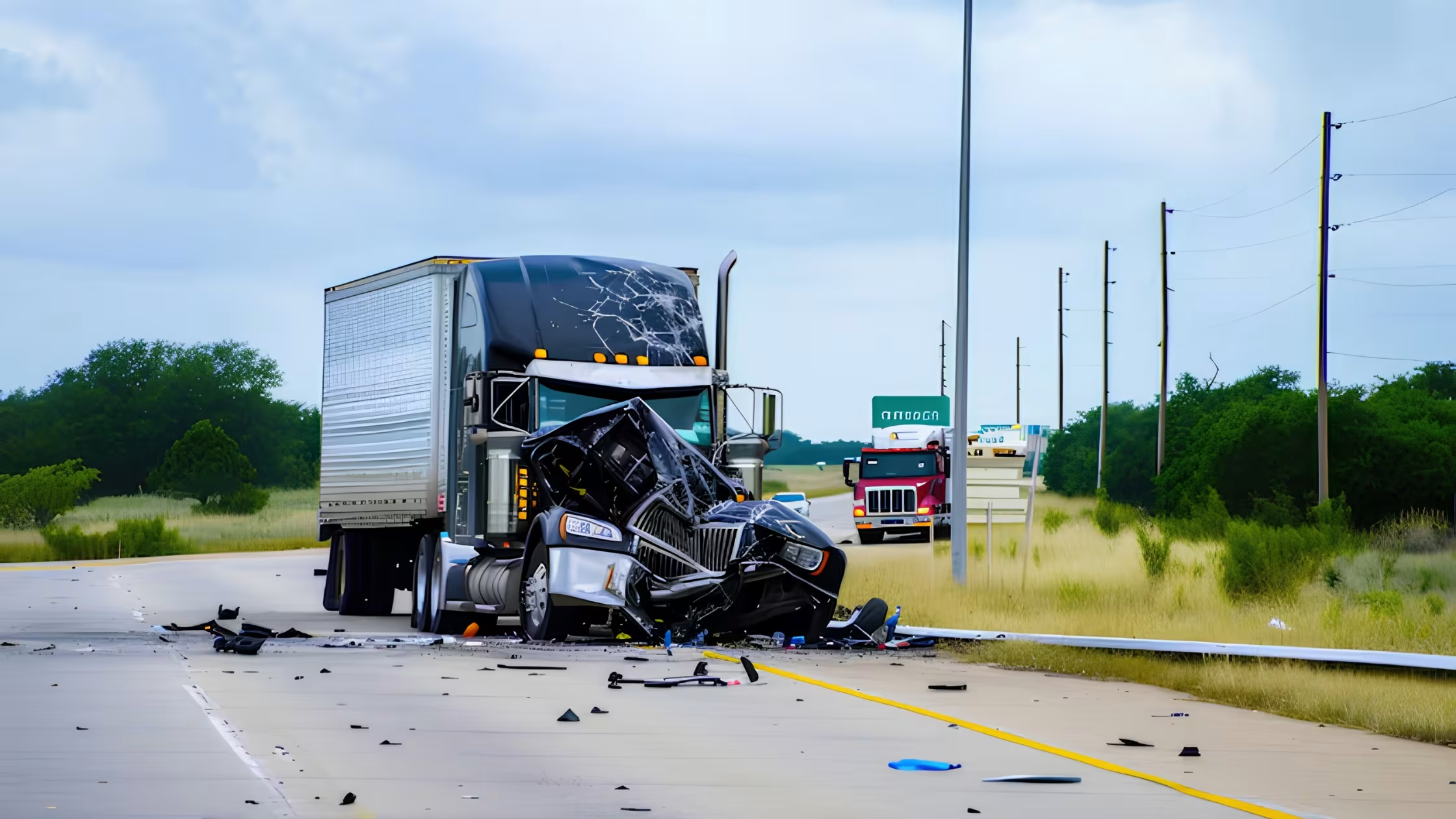
A truck crash can turn into a legal battle long after the tow trucks leave the scene, especially when critical records disappear, vehicles are repaired too soon, or electronic data is erased. If you are trying to understand truck crash evidence and why it matters in a claim, this guide explains what spoliation means, why it is so damaging in commercial trucking cases, and how victims can protect themselves before evidence is lost. This article is written for crash victims, families, and injury professionals in the trucking and personal injury industry, and it covers preservation duties, federal trucking records, litigation consequences, and the steps a truck accident lawyer can take to protect your case.

Why Spoliation Matters

Spoliation is the destruction, alteration, or failure to preserve evidence that may be relevant to a legal claim. In truck cases, that evidence may include the tractor, trailer, electronic logging device data, engine control module data, dispatch records, maintenance logs, dashcam footage, and driver qualification files. When that evidence disappears, it becomes harder to prove fault, identify violations, and recover fair compensation.

Commercial trucking claims are especially vulnerable because companies often control the most important evidence. Once they know a crash may lead to litigation, they may have a duty to preserve records and vehicle data. Courts can impose serious consequences if a company fails to do so.

What Courts Mean by Spoliation

Spoliation is not just “missing evidence.” It can include deleting files, overwriting data, scrapping a truck, repairing a vehicle before inspection, failing to preserve logs, or allowing routine retention policies to erase records that should have been saved. In truck litigation, even unintentional loss can lead to sanctions if the duty to preserve had already attached.

That duty generally begins when a company reasonably should know a claim is likely. In a serious crash with injuries, death, or major vehicle damage, that point may arrive very quickly. Courts have recognized that trucking companies must preserve evidence that may reflect what happened during the collision.

Evidence That Can Disappear Fast

The most important truck accident evidence preservation efforts usually focus on records that can be overwritten, discarded, or altered within days or weeks. These include electronic logging device data, GPS records, engine data, maintenance files, post-crash inspections, cell phone records, and trailer loading documents.

Some evidence is physical, such as damaged parts, tire condition, cargo securement, and scene debris. Other evidence is digital and may vanish without a prompt preservation letter. That is why early legal action matters in truck cases far more than many people realize.

Evidence at a Glance

Evidence Type Why It Matters Risk if Not Preserved
ELD and hours-of-service data Shows driving time and possible fatigue Can be overwritten or changed
ECM / black box data May show speed, braking, and impact details Lost if truck is repaired or scrapped
Dashcam footage Captures the crash or roadway behavior Often overwritten automatically
Maintenance records Can prove poor upkeep or equipment failure May be destroyed under retention schedules
Driver qualification files Shows training, licensing, and violations Can disappear after notice is delayed

Federal Rules That Matter

Federal trucking regulations play a major role in spoliation cases because they help establish what records should exist and how they should be maintained. The FMCSA regulates hours of service, driver qualifications, vehicle inspections, and electronic logging practices. The FMCSA also provides guidance on retention periods for electronic logging device records, which can become important when determining whether a company failed to preserve needed data.

When a trucking company knows a crash may result in litigation, federal preservation obligations can overlap with civil discovery duties. That combination is powerful because it allows attorneys to argue that the company should have kept the records, protected the vehicle, and prevented routine deletion.

How Spoliation Affects a Lawsuit

Spoliation can change the entire direction of a truck accident lawsuit. If important evidence is destroyed, a lawyer may ask the court for sanctions, which can include fines, exclusion of defense evidence, or an adverse inference instruction telling the jury it may assume the missing evidence would have been unfavorable to the defendant.

In serious truck crash cases, courts have found sanctions appropriate even when the destruction was not clearly intentional, if the company had a duty to preserve and failed to do so. That is why timing is crucial. The longer a victim waits to send a preservation letter, the greater the risk that key evidence will vanish.

Legal Actions After Destruction

Once evidence has been destroyed, a legal team may pursue several remedies:

  • A spoliation motion asking the court to sanction the defendant.
  • An adverse inference instruction at trial.
  • Exclusion of defense experts or documents.
  • Additional discovery into who controlled the missing evidence.
  • Claims for negligent or intentional destruction, depending on state law and the case facts.

These remedies matter because they help level the playing field when one side had control of the evidence and failed to protect it. In some cases, the destruction itself can become a central issue in settlement negotiations.

Why Preservation Letters Matter

A preservation letter tells the trucking company, insurer, and related parties to save specific evidence immediately. It may request the tractor, trailer, ECM data, driver logs, maintenance records, dispatch communications, dashcam footage, and other materials tied to the crash. When sent early, it can stop routine deletion and make later sanctions easier to prove if evidence still disappears.

This is one reason a prompt consultation with a truck accident lawyer is so important. The legal team can identify what must be preserved, send the right notice, and act before the most valuable proof is gone.

Why Victims Should Act Quickly

A crash victim may feel pressure to focus only on treatment, which is understandable. But in trucking cases, delay can harm the legal claim because the most important evidence is often held by the trucking company or its insurers. If the truck is repaired, sold, or destroyed before inspection, the injured person may lose the chance to prove a critical defect or unsafe condition.

For readers who want to understand how these crashes happen in the first place, our related article on why truck accidents are dangerous offers helpful context. If you want to see what causes these collisions from a liability perspective, read our post on truck-car collision causes.

A Realistic Example

Imagine a delivery truck rear-ends a passenger car at highway speed. The driver’s company repairs the truck within days, and the dashcam footage is overwritten under a normal retention cycle. Months later, the injured person still has neck pain, lost income, and no way to inspect the truck’s braking system or electronic data.

In that situation, the case may become a fight over what was lost and why. If a preservation letter had been sent early, the victim may have had a much better chance of securing the evidence needed to support the claim. That is the practical danger of spoliation.

Connection to Truck-SUV Collisions

Spoliation is especially important in impact cases involving large passenger vehicles, including SUVs, because the force of the collision can be severe even when the smaller vehicle looks drivable afterward. If you want to see how these impact patterns are handled in practice, visit our page on truck and SUV collisions. That page expands on the legal and safety issues that often arise in these crashes.

Law Firm Perspective

From a plaintiff’s perspective, spoliation is one of the most frustrating parts of trucking litigation because it can prevent the truth from coming out. In many cases, the fight is not just about the crash itself; it is about who controlled the evidence, who had the duty to preserve it, and when that duty began. That is why experienced litigation counsel should move quickly, preserve records early, and investigate every source of digital and physical proof.

For a deeper look at the federal framework behind these cases, see our related guide on truck accidents and federal laws. Together, these resources help explain how evidence preservation and federal compliance intersect in a serious injury claim.

Spoliation Timeline

Crash occurs

Notice of potential claim arises

Duty to preserve evidence attaches

Preservation letter sent

Data, truck, logs, and footage secured

Evidence destroyed? → sanctions and court remedies may follow.

Closing Thoughts

If a trucking company destroyed, altered, or failed to preserve evidence after your crash, you deserve answers and accountability. At Ladva Law, we understand how devastating it is when vital proof disappears before your voice is heard, and we are committed to helping injured victims and families fight for truth, justice, and fair compensation.

FAQ

Q What is spoliation in a truck case?

A: Spoliation in a truck case means the destruction, alteration, or failure to preserve evidence that may be relevant to the crash and resulting lawsuit.

Q What evidence is most important in a truck accident case?

A: The most important evidence often includes ELD data, ECM data, dashcam footage, maintenance records, inspection reports, and driver qualification files.

Q Can a trucking company be punished for destroying evidence?

A: Yes. Courts may impose sanctions such as adverse inference instructions, fines, or limits on what the defense can present at trial.

Q How soon should a preservation letter be sent?

A: As soon as possible after the crash, because key records and data can be overwritten or lost quickly.

Q Do federal trucking laws affect spoliation claims?

A: Yes. FMCSA rules and record-retention guidance can help show what should have been preserved and when the duty to keep it existed.

Q Why should I contact a lawyer right away after a truck crash?

A: Because a lawyer can send preservation notices, secure evidence, and act before critical records disappear.

Disclaimer:

The information provided on this website is for general informational purposes only and does not constitute legal advice. Case studies and past results described on this website are for illustrative purposes only and do not guarantee similar outcomes in future matters. Each legal case is unique and depends on its specific facts and circumstances. Some details in case studies may be modified to protect client privacy.


Author

Contents

A truck crash can turn into a legal battle long after the tow trucks leave the scene, especially when critical records disappear, vehicles are repaired too soon, or electronic data is erased. If you are trying to understand truck crash evidence and why it matters in a claim, this guide explains what spoliation means, why it is so damaging in commercial trucking cases, and how victims can protect themselves before evidence is lost. This article is written for crash victims, families, and injury professionals in the trucking and personal injury industry, and it covers preservation duties, federal trucking records, litigation consequences, and the steps a truck accident lawyer can take to protect your case.

Why Spoliation Matters

Spoliation is the destruction, alteration, or failure to preserve evidence that may be relevant to a legal claim. In truck cases, that evidence may include the tractor, trailer, electronic logging device data, engine control module data, dispatch records, maintenance logs, dashcam footage, and driver qualification files. When that evidence disappears, it becomes harder to prove fault, identify violations, and recover fair compensation.

Commercial trucking claims are especially vulnerable because companies often control the most important evidence. Once they know a crash may lead to litigation, they may have a duty to preserve records and vehicle data. Courts can impose serious consequences if a company fails to do so.

What Courts Mean by Spoliation

Spoliation is not just “missing evidence.” It can include deleting files, overwriting data, scrapping a truck, repairing a vehicle before inspection, failing to preserve logs, or allowing routine retention policies to erase records that should have been saved. In truck litigation, even unintentional loss can lead to sanctions if the duty to preserve had already attached.

That duty generally begins when a company reasonably should know a claim is likely. In a serious crash with injuries, death, or major vehicle damage, that point may arrive very quickly. Courts have recognized that trucking companies must preserve evidence that may reflect what happened during the collision.

Evidence That Can Disappear Fast

The most important truck accident evidence preservation efforts usually focus on records that can be overwritten, discarded, or altered within days or weeks. These include electronic logging device data, GPS records, engine data, maintenance files, post-crash inspections, cell phone records, and trailer loading documents.

Some evidence is physical, such as damaged parts, tire condition, cargo securement, and scene debris. Other evidence is digital and may vanish without a prompt preservation letter. That is why early legal action matters in truck cases far more than many people realize.

Evidence at a Glance

Evidence Type Why It Matters Risk if Not Preserved
ELD and hours-of-service data Shows driving time and possible fatigue Can be overwritten or changed
ECM / black box data May show speed, braking, and impact details Lost if truck is repaired or scrapped
Dashcam footage Captures the crash or roadway behavior Often overwritten automatically
Maintenance records Can prove poor upkeep or equipment failure May be destroyed under retention schedules
Driver qualification files Shows training, licensing, and violations Can disappear after notice is delayed

Federal Rules That Matter

Federal trucking regulations play a major role in spoliation cases because they help establish what records should exist and how they should be maintained. The FMCSA regulates hours of service, driver qualifications, vehicle inspections, and electronic logging practices. The FMCSA also provides guidance on retention periods for electronic logging device records, which can become important when determining whether a company failed to preserve needed data.

When a trucking company knows a crash may result in litigation, federal preservation obligations can overlap with civil discovery duties. That combination is powerful because it allows attorneys to argue that the company should have kept the records, protected the vehicle, and prevented routine deletion.

How Spoliation Affects a Lawsuit

Spoliation can change the entire direction of a truck accident lawsuit. If important evidence is destroyed, a lawyer may ask the court for sanctions, which can include fines, exclusion of defense evidence, or an adverse inference instruction telling the jury it may assume the missing evidence would have been unfavorable to the defendant.

In serious truck crash cases, courts have found sanctions appropriate even when the destruction was not clearly intentional, if the company had a duty to preserve and failed to do so. That is why timing is crucial. The longer a victim waits to send a preservation letter, the greater the risk that key evidence will vanish.

Legal Actions After Destruction

Once evidence has been destroyed, a legal team may pursue several remedies:

  • A spoliation motion asking the court to sanction the defendant.
  • An adverse inference instruction at trial.
  • Exclusion of defense experts or documents.
  • Additional discovery into who controlled the missing evidence.
  • Claims for negligent or intentional destruction, depending on state law and the case facts.

These remedies matter because they help level the playing field when one side had control of the evidence and failed to protect it. In some cases, the destruction itself can become a central issue in settlement negotiations.

Why Preservation Letters Matter

A preservation letter tells the trucking company, insurer, and related parties to save specific evidence immediately. It may request the tractor, trailer, ECM data, driver logs, maintenance records, dispatch communications, dashcam footage, and other materials tied to the crash. When sent early, it can stop routine deletion and make later sanctions easier to prove if evidence still disappears.

This is one reason a prompt consultation with a truck accident lawyer is so important. The legal team can identify what must be preserved, send the right notice, and act before the most valuable proof is gone.

Why Victims Should Act Quickly

A crash victim may feel pressure to focus only on treatment, which is understandable. But in trucking cases, delay can harm the legal claim because the most important evidence is often held by the trucking company or its insurers. If the truck is repaired, sold, or destroyed before inspection, the injured person may lose the chance to prove a critical defect or unsafe condition.

For readers who want to understand how these crashes happen in the first place, our related article on why truck accidents are dangerous offers helpful context. If you want to see what causes these collisions from a liability perspective, read our post on truck-car collision causes.

A Realistic Example

Imagine a delivery truck rear-ends a passenger car at highway speed. The driver’s company repairs the truck within days, and the dashcam footage is overwritten under a normal retention cycle. Months later, the injured person still has neck pain, lost income, and no way to inspect the truck’s braking system or electronic data.

In that situation, the case may become a fight over what was lost and why. If a preservation letter had been sent early, the victim may have had a much better chance of securing the evidence needed to support the claim. That is the practical danger of spoliation.

Connection to Truck-SUV Collisions

Spoliation is especially important in impact cases involving large passenger vehicles, including SUVs, because the force of the collision can be severe even when the smaller vehicle looks drivable afterward. If you want to see how these impact patterns are handled in practice, visit our page on truck and SUV collisions. That page expands on the legal and safety issues that often arise in these crashes.

Law Firm Perspective

From a plaintiff’s perspective, spoliation is one of the most frustrating parts of trucking litigation because it can prevent the truth from coming out. In many cases, the fight is not just about the crash itself; it is about who controlled the evidence, who had the duty to preserve it, and when that duty began. That is why experienced litigation counsel should move quickly, preserve records early, and investigate every source of digital and physical proof.

For a deeper look at the federal framework behind these cases, see our related guide on truck accidents and federal laws. Together, these resources help explain how evidence preservation and federal compliance intersect in a serious injury claim.

Spoliation Timeline

Crash occurs

Notice of potential claim arises

Duty to preserve evidence attaches

Preservation letter sent

Data, truck, logs, and footage secured

Evidence destroyed? → sanctions and court remedies may follow.

Closing Thoughts

If a trucking company destroyed, altered, or failed to preserve evidence after your crash, you deserve answers and accountability. At Ladva Law, we understand how devastating it is when vital proof disappears before your voice is heard, and we are committed to helping injured victims and families fight for truth, justice, and fair compensation.

FAQ

Q What is spoliation in a truck case?

A: Spoliation in a truck case means the destruction, alteration, or failure to preserve evidence that may be relevant to the crash and resulting lawsuit.

Q What evidence is most important in a truck accident case?

A: The most important evidence often includes ELD data, ECM data, dashcam footage, maintenance records, inspection reports, and driver qualification files.

Q Can a trucking company be punished for destroying evidence?

A: Yes. Courts may impose sanctions such as adverse inference instructions, fines, or limits on what the defense can present at trial.

Q How soon should a preservation letter be sent?

A: As soon as possible after the crash, because key records and data can be overwritten or lost quickly.

Q Do federal trucking laws affect spoliation claims?

A: Yes. FMCSA rules and record-retention guidance can help show what should have been preserved and when the duty to keep it existed.

Q Why should I contact a lawyer right away after a truck crash?

A: Because a lawyer can send preservation notices, secure evidence, and act before critical records disappear.

Disclaimer:

The information provided on this website is for general informational purposes only and does not constitute legal advice. Case studies and past results described on this website are for illustrative purposes only and do not guarantee similar outcomes in future matters. Each legal case is unique and depends on its specific facts and circumstances. Some details in case studies may be modified to protect client privacy.

x.com
facebook
linKedin
Instagram

Related Articles

All Articles
Personal Injuries
What to Do After Being Hit by a Commercial Truck: A Step-by-Step Action Plan
Read Article
June 20, 2026
Personal Injuries
Can Passengers File Claims After a Bus Accident? Legal Rights Explained
Read Article
June 18, 2026
Personal Injuries
What Makes Truck Accident Injuries So Serious? Why Semi-Truck Collisions Cause Catastrophic, Life-Changing Injuries
Read Article
June 16, 2026

Still have questions?

Drop your thoughts - we’ll get back to you.
Thank you! Your submission has been received!
Oops! Something went wrong while submitting the form.
Contact
Contact

Book Free Consultation

Contact Us
Write us a Message
Thank you! Your submission has been received!
Oops! Something went wrong while submitting the form.