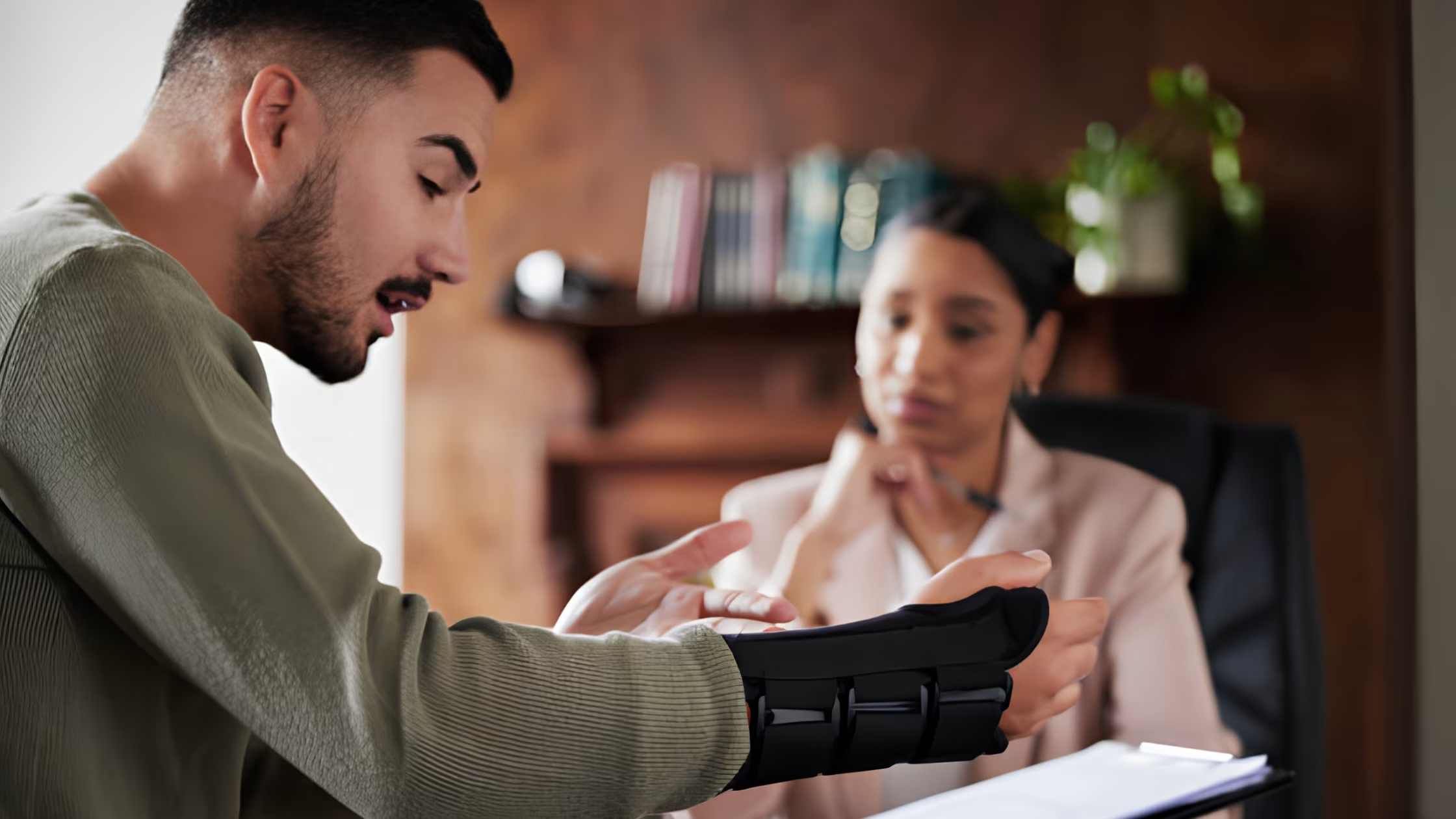

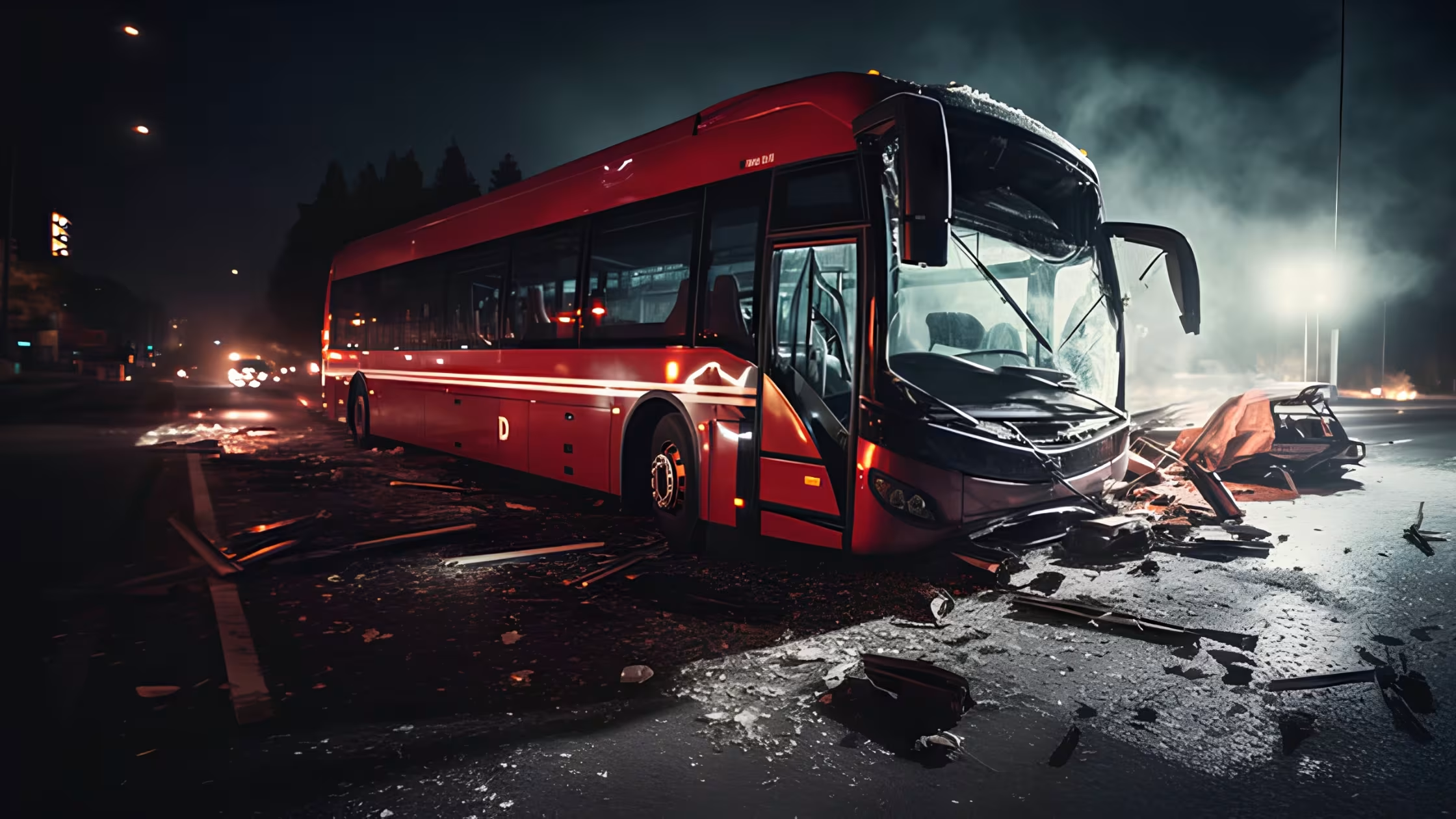
Bus accidents can cause serious injuries in an instant, and passengers are often left with medical bills, missed work, and uncertainty about what to do next. This guide explains bus passenger rights, whether can I sue after a bus accident ? applies in your situation, when a bus accident lawyer may help, and how bus accident compensation works in a bus accident personal injury claim. It is written for injured passengers, families, and anyone trying to understand the legal options after a bus crash, and it covers liability, evidence, deadlines, insurance issues, and the legal steps that matter most.
Who Can File a Bus Accident Claim as a Passenger?
In most cases, an injured passenger can file a claim if another party’s negligence caused the crash or worsened the injuries. Passengers are usually not at fault, which gives them a strong legal position when there is evidence of unsafe driving, poor maintenance, faulty equipment, or another driver’s mistake. A claim may be brought against a bus driver, a bus company, a public transit agency, a third-party driver, a maintenance contractor, or a parts manufacturer, depending on the facts.
This matters because bus accident cases are often more complex than ordinary car crashes. Multiple parties may share responsibility, and each one may be protected by different insurance policies and legal defenses. A passenger claim must therefore focus on both fault and proof.
What Are Your Rights After a Bus Accident?
Passengers have the right to seek compensation for injuries caused by negligence, but the exact process depends on who operated the bus and where the crash occurred. In California, injured passengers may pursue damages for medical expenses, lost wages, pain and suffering, and future care when the facts support the claim. If a government transit system is involved, special notice rules and shorter deadlines may apply.
That means a passenger should not assume the process is the same in every case. A private charter bus claim may follow a very different path from a city transit claim. Understanding the type of bus involved is one of the first steps in protecting your legal rights. If the crash happened on Bay Area transit, our article on San Francisco Muni bus accidents provides helpful local context.
Can You Sue After a Bus Accident Injury?
Yes, you may be able to sue after a bus accident if negligence caused your injuries and the law allows a civil claim. A lawsuit may be appropriate when the insurer refuses a fair settlement, when the bus company disputes fault, or when the injuries are severe enough to justify formal litigation. In many cases, a claim starts with the insurance company, but it can move into a lawsuit if the parties cannot resolve the case.
If the bus was operated by a public entity, the situation can become more technical because government claims often require special notice procedures before a lawsuit can be filed. That is why timing matters so much. Missing an administrative deadline can damage or even block a claim.
Who May Be Liable for a Bus Passenger’s Injuries?
Liability in a bus crash depends on what caused the accident and who had a duty to prevent it. The bus driver may be liable for speeding, distraction, fatigue, or unsafe maneuvering. The bus company may be liable for negligent hiring, poor training, weak supervision, or bad maintenance. Another motorist may be liable if they caused the collision, and a maintenance provider or manufacturer may also be responsible if a defect or repair failure contributed to the crash.
Identifying the correct defendant matters because compensation often depends on the available insurance coverage and legal responsibility. In serious bus cases, the strongest claims are usually built by tracing every possible source of fault. That is why early investigation is so important.
What Laws Affect Bus Accident Claims?
Bus accident claims may involve state negligence law, civil liability rules, and in some cases federal transportation safety standards. The Federal Motor Carrier Safety Administration regulates many commercial passenger carriers and sets safety expectations for driver qualification, maintenance, and hours of service. Those standards do not replace state personal injury law, but they can provide strong evidence when a carrier fails to meet safety obligations.
If a public transit system is involved, government claim rules may also apply. These rules can affect notice requirements, filing deadlines, and the way damages are pursued. In other words, bus accident cases are not just about proving injury; they are also about following the correct legal path from the beginning. For a deeper look at how fault evidence is preserved, see our bus accident investigation guide.
What Compensation Can Bus Accident Passengers Recover?
Passengers may be able to recover several categories of damages if their claim is successful. The amount depends on the severity of the injuries, the strength of the evidence, the available insurance, and whether the injuries cause lasting harm. Compensation should reflect both the immediate losses and the long-term impact of the crash.
A serious injury claim should never be evaluated only by the first medical bill. Future treatment, rehabilitation, and work limitations can be just as important as the emergency room visit. That is why a full damages review is critical before any settlement is accepted.
What Should You Do Right After the Crash?
The first hours after a bus accident can shape the entire claim. Medical treatment should come first, even if symptoms seem mild, because some injuries do not appear immediately. After that, evidence preservation becomes essential.
- Call 911 and seek medical attention.
- Take photos of the scene, injuries, and vehicle damage if possible.
- Get the bus number, route, or company name.
- Collect witness names and contact information.
- Report the crash to the bus operator or transit agency.
- Save all medical records, bills, and discharge papers.
- Avoid giving a recorded statement too early.
- Speak with a lawyer before accepting any settlement offer.
A bus crash investigation often depends on time-sensitive evidence such as surveillance footage, driver logs, inspection records, and electronic data. Once that evidence is lost, it may be much harder to prove fault. Acting quickly helps protect both health and legal rights.
How Insurance Companies Handle Bus Accident Claims
Insurance companies often move fast after a crash, but not always in the passenger’s interest. Adjusters may ask for recorded statements, request broad medical authorizations, or offer quick settlements before the full extent of the injuries is known. That can create pressure to settle for less than the case is worth. If you want a better understanding of that process, our article on bus accident insurance adjusters explains how insurers evaluate these claims.
Why Bus Accident Cases Need Legal Help
Bus accident claims can become complicated very quickly because they may involve public agencies, private carriers, commercial insurance, multiple defendants, and strict deadlines. A lawyer can help identify liable parties, gather evidence, calculate damages, and negotiate from a stronger position. That is especially important when serious injuries or government rules are involved.
For readers who want to learn more about the core service area behind this topic, the main practice page on Muni bus accident cases explains how these claims are handled and why early legal action matters. It is a useful next step for passengers trying to understand whether they have a valid case and what evidence should be preserved immediately.
Everyday Bus Accident Example
Imagine a passenger riding a city bus when the bus suddenly swerves and hits a pole after the driver glances away from the road. The passenger suffers a neck injury, concussion symptoms, and two weeks of lost work. Even if no one is killed and the bus continues operating, the passenger may still have a strong claim for medical bills, wage loss, and pain and suffering.
Now imagine a charter bus with brake failure that had been reported during prior inspections. In that case, the bus company, maintenance contractor, or parts manufacturer may be part of the claim. These examples show why bus accident cases are rarely simple and why evidence matters from day one.
If a bus crash has left you injured, overwhelmed, or unsure what comes next, you do not have to face the legal process alone. Contact Ladva Law today to protect your rights, preserve the evidence that matters, and pursue the compensation your recovery deserves.
FAQ
Q Can passengers file a personal injury claim after a bus accident?
A: Yes, passengers can usually file a personal injury claim if another party’s negligence caused the crash or made the injuries worse.
Q Can I sue after a bus accident if the bus was public transportation?
A: Possibly, but government claims may require special notice and shorter deadlines.
Q What if another driver caused the bus crash?
A: You may still have a claim against that driver, and in some cases the bus operator may also share responsibility.
Q How long do I have to file a bus accident claim?
A: Deadlines vary by state and by whether a public entity is involved, so prompt legal review is important.
Q What compensation can I recover after a bus accident?
A: You may be able to recover medical costs, lost wages, pain and suffering, and future treatment expenses.
Q Do I need a bus accident lawyer?
A: A lawyer is especially helpful when injuries are serious, liability is disputed, or multiple insurers are involved.
Q What evidence helps a bus accident claim?
A Medical records, photos, witness statements, police reports, video footage, and driver or maintenance records can all help.
Q Can a bus company deny my claim?
A: They may try, which is why strong evidence and early legal action can make a major difference.
Disclaimer:
The information provided on this website is for general informational purposes only and does not constitute legal advice. Case studies and past results described on this website are for illustrative purposes only and do not guarantee similar outcomes in future matters. Each legal case is unique and depends on its specific facts and circumstances. Some details in case studies may be modified to protect client privacy.