

A brain injury can change far more than the way a person feels physically. After a crash, fall, or other traumatic event, someone may begin forgetting appointments, struggling to concentrate, losing track of conversations, or having difficulty making decisions. These changes can be subtle at first, making them easy to overlook and sometimes difficult to prove in an insurance claim. Understanding memory loss after brain injury, recognizing the warning signs, obtaining appropriate medical evaluation, and preserving evidence can all be important steps toward protecting your health and legal rights. This guide explains the causes of cognitive problems after traumatic brain injury (TBI), common symptoms, the role of neuropsychological testing, the evidence that may support a claim, and key California personal injury considerations.
What Is Cognitive Damage After a Brain Injury?
Traumatic brain injury occurs when a bump, blow, jolt, or penetrating injury disrupts normal brain function. According to the CDC, TBI can affect thinking and memory as well as physical, emotional, behavioral, and sleep functions.
Cognitive damage brain injury can involve problems with one or more mental processes, including:
- Memory and recall
- Attention and concentration
- Processing speed
- Communication and language
- Planning and organization
- Judgment and decision-making
- Learning new information
- Problem-solving
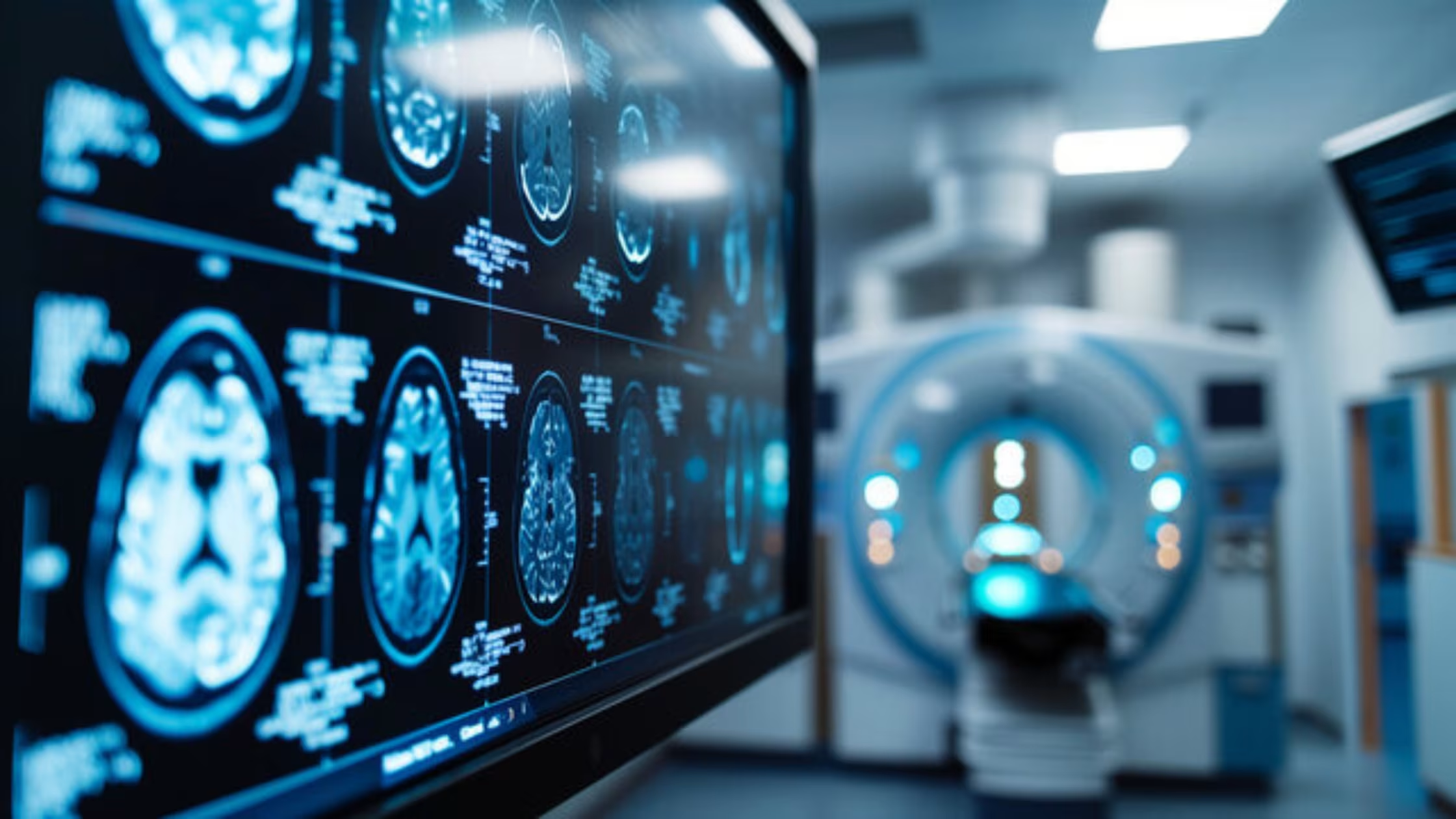
Importantly, cognitive symptoms do not always correspond neatly with the appearance of a brain on a conventional scan. A person can experience significant functional difficulties while standard imaging does not identify an obvious structural abnormality. That is one reason clinical assessment and, when appropriate, neuropsychological testing can be important.
What Causes Cognitive Problems After a Brain Injury?
A TBI may occur through several mechanisms. A vehicle collision, for example, can cause the head to strike an interior surface, or the brain can move rapidly inside the skull during acceleration and deceleration. Common causes include:
Motor Vehicle Collisions: Car, truck, motorcycle, bicycle, and pedestrian crashes can produce forces capable of causing concussion or more serious TBI.
Falls: Falls are another important source of traumatic brain injury and can affect people of all ages.
Sports and Recreational Injuries: Contact sports and activities involving falls or collisions can expose participants to repeated head impacts.
Workplace and Construction Accidents: Falls from height, being struck by an object, and other workplace incidents may result in TBI.
Assaults and Other Traumatic Events: A direct blow to the head can cause brain injury even when there is no obvious external wound.
Common Cognitive and Brain Injury Symptoms
The symptoms of TBI vary depending on the severity and circumstances of the injury. The National Institutes of Health identifies difficulties with memory, concentration, attention, thinking, and decision-making among potential cognitive or behavioral symptoms.
Cognitive symptoms may include:
A person experiencing traumatic brain injury memory loss may not simply "forget things." The problem can interfere with employment, education, household responsibilities, relationships, and independence.
That distinction matters. A cognitive injury may affect a person's ability to perform the same job they performed successfully before an accident, even when their physical injuries appear relatively minor.
Why Symptoms May Be Difficult to Recognize
One of the challenges with brain injuries is that symptoms can be invisible. Someone with a broken bone may have an X-ray showing the injury. Cognitive impairment may require a different approach to diagnosis and documentation.
Family members, coworkers, and friends sometimes notice changes before the injured person does. For example, a spouse might observe that someone repeatedly asks the same question, forgets routine responsibilities, becomes overwhelmed by tasks that were previously easy, or has unusual difficulty organizing their day. These observations can be important to communicate to treating professionals.
The CDC notes that mild TBI can involve problems with thinking clearly, concentration, memory, and processing information. Symptoms can also change during recovery.
What Is a Neuropsychological Evaluation?
A neuropsychological evaluation is a specialized assessment of cognitive and psychological functioning. Depending on the individual and clinical question, testing may examine areas such as memory, attention, processing speed, language, executive functioning, and other cognitive abilities.
A neuropsychological evaluation brain injury assessment can help a qualified professional identify patterns of cognitive difficulty and determine how those difficulties compare with expected functioning.
It should not be viewed as a test designed simply to "prove" a legal claim. Its primary purpose is clinical assessment. In a personal injury case, however, appropriately conducted medical evaluation and documentation may also become relevant evidence concerning the nature and consequences of an injury.
Ladva Law's detailed resource on this subject explains how neuropsychological evaluation can fit into California car accident TBI claims: Neuropsychological Evaluation for TBI in California Car Accident Claims: Top 5 Tests + Legal Impact Roadmap (SF Guide)
What Evidence Can Support a Brain Injury Claim?
A successful personal injury claim generally requires evidence connecting the defendant's conduct to the injury and the resulting damages. In a TBI case, documentation may include:
- Emergency room and hospital records
- Neurology records
- Neuropsychological testing
- Imaging and diagnostic reports
- Treatment and rehabilitation records
- Medication records
- Employment records
- Evidence of missed work or reduced performance
- Statements from family members and coworkers
- Photographs and accident-scene evidence
- Witness statements
- Accident reconstruction evidence, when appropriate
- Records documenting changes in daily functioning
This makes brain injury lawsuit evidence particularly important when symptoms are primarily cognitive or emerge gradually.
A simple symptom journal can also help a patient communicate changes to medical providers. Instead of writing only "memory is worse," specific observations may be more useful for example: "Forgot the instructions given during this morning's appointment" or "Needed help completing a task I routinely handled before the collision." Such documentation should be truthful, contemporaneous, and consistent with medical advice.
Cognitive Damage and Post-Concussion Syndrome
Not every concussion produces long-term cognitive problems. Many people with mild TBI improve over days or weeks, while others experience persistent symptoms. The CDC emphasizes that recovery varies from person to person. When symptoms continue after a concussion, medical professionals may evaluate the person for persistent post-concussive symptoms or other conditions.
For more information specifically addressing post-concussion TBI claims in San Francisco, see: Post-Concussion Syndrome After SF Car Crash: Proving 'Invisible' TBI Damages (Northern CA 2026 Guide)
TBI vs. PTSD: Why the Distinction Matters
Brain injuries and psychological trauma can produce overlapping symptoms. Problems with concentration, sleep, mood, and memory can occur in both TBI and PTSD. That does not mean the conditions are interchangeable. A proper medical evaluation should consider the complete clinical picture, including the mechanism of injury, symptoms, medical history, examination findings, and appropriate testing.
For readers dealing with both neurological and psychological symptoms after a California car accident, Ladva Law provides additional information here: How California Law Separates PTSD from TBI Claims in Car Accident Lawsuits (SF Guide)
How California Law May Apply to a Brain Injury Claim
California personal injury law allows an injured person to seek damages for harm proximately caused by another party's wrongful conduct. California Civil Code §3333 provides that, for a breach of a non-contractual obligation, damages generally measure the detriment proximately caused by the breach.
Depending on the facts, damages in a TBI case may include:
- Past and future medical expenses
- Rehabilitation costs
- Lost wages
- Reduced earning capacity
- Physical pain and suffering
- Emotional distress
- Loss of enjoyment of life
- Other legally recoverable losses
The severity and value of a claim cannot be determined from a diagnosis alone. The actual impact on the person's life, the strength of the medical evidence, liability, causation, and other case-specific factors all matter.
California's Personal Injury Deadline
California Code of Civil Procedure §335.1 generally provides a two-year period for an action for injury or death caused by another person's wrongful act or neglect. Exceptions and special rules can apply depending on the circumstances, including claims involving governmental entities or particular defendants.
Because a deadline can determine whether a lawsuit can proceed, anyone considering a TBI claim should obtain case-specific legal advice rather than relying solely on a general online deadline.
Protecting Your Rights After a Brain Injury
If you believe you suffered a TBI in an accident, consider these practical steps:
- Get medical attention: Do not ignore cognitive, neurological, or behavioral changes after a head injury.
- Follow your treatment plan: Keep appointments and tell your providers about changes in memory, concentration, mood, sleep, or daily functioning.
- Document changes accurately: Keep track of specific problems affecting work and everyday life.
- Preserve accident evidence: Photographs, reports, witness information, video, and other evidence may become important later.
- Avoid minimizing your symptoms: Tell your healthcare providers what is actually happening, even if the symptoms seem minor or embarrassing.
- Speak with an experienced personal injury attorney: A lawyer can evaluate liability, damages, deadlines, and the evidence needed for your particular claim.
What If Symptoms Appear Weeks or Months Later?
Delayed recognition can create additional challenges. Someone may initially focus on obvious injuries after a collision and only later recognize problems with concentration, memory, sleep, mood, or mental fatigue. That does not automatically mean the symptoms are unrelated to the accident. It does mean the medical history and timing need to be carefully evaluated. Tell your healthcare provider when symptoms began, how they have changed, and how they affect your daily life. Do not exaggerate symptoms, but do not minimize them either. If cognitive symptoms are affecting your work or personal life, specific examples can be particularly useful.
Instead of simply saying: "My memory is bad."
Explain what actually happens: "I now need written instructions for tasks I previously completed without assistance."
Specific, consistent information can help healthcare professionals understand the problem and determine what evaluation or treatment may be appropriate.
When Should You Consider a Brain Injury Claim?
Not every brain injury requires a lawsuit. However, if another person's negligence caused your injury and you are experiencing ongoing cognitive, physical, or emotional effects, it may be appropriate to discuss your legal options with a personal injury attorney.
This is especially important when an injury affects your ability to work, care for your family, drive, study, communicate, or perform activities you previously handled without difficulty.
A TBI claim is not simply about proving that someone hit their head. The legal case generally requires evidence addressing several important questions:
- Did another party have a legal duty to act reasonably?
- Did that party breach that duty?
- Did the breach cause the injury?
- What damages resulted from the injury?
- What evidence supports those damages?
The answers depend on the facts of each accident.
How Ladva Law Approaches Brain Injury Claims
At Ladva Law, we understand that a traumatic brain injury can affect much more than a person's physical health. A client may be struggling to return to work, experiencing changes in family relationships, dealing with medical expenses, or worrying about whether cognitive problems will continue.
Our role is to investigate the circumstances surrounding the accident, evaluate the available evidence, understand the medical consequences, and pursue the compensation available under applicable California law. That can involve working with medical professionals, reviewing medical and employment records, preserving accident evidence, evaluating future damages, and addressing disputes concerning causation or the extent of the injury.
The goal is not simply to put a diagnosis on a legal file. It is to understand how the injury has affected the person's life and build the claim around reliable evidence.
Final Thoughts
Cognitive changes after a brain injury can be difficult to see, but their impact can be profound. Forgetting a conversation, losing concentration at work, struggling to organize everyday tasks, or repeatedly searching for familiar words can change a person's independence, career, and relationships. If these changes began after an accident, do not assume they are simply stress or something you have to live with. Medical evaluation can help identify what is happening and guide treatment. At the same time, timely preservation of evidence can help protect your legal options.
At Ladva Law, we understand that a brain injury claim involves more than a diagnosis on a medical record. It can involve the way an injury changes how someone works, communicates, cares for family, and experiences everyday life. If you or a loved one has suffered a brain injury because of someone else's negligence, consider speaking with an experienced California personal injury attorney about your circumstances. Early guidance can help you understand your rights, preserve important evidence, and determine what legal options may be available.
At Ladva Law, we represent personal injury victims throughout Northern California and understand the serious consequences that can follow a traumatic brain injury. If an accident has changed the way you think, work, communicate, or live, you deserve to have those consequences understood, not dismissed.
Contact Ladva Law to discuss your circumstances and learn what legal options may be available. Your injury may be invisible to others, but that does not make its impact any less real.
FAQ
Q Can a brain injury cause memory loss?
A: Yes. Memory problems are among the cognitive symptoms associated with TBI. The severity and duration vary, and medical evaluation is important for determining the cause and appropriate treatment.
Q What are the most common cognitive symptoms of a brain injury?
A: Common cognitive symptoms can include difficulty remembering, concentrating, thinking clearly, processing information, and making decisions.
Q Can you have a TBI with a normal CT or MRI?
A: A normal conventional scan does not necessarily mean a person has no concussion or functional cognitive symptoms. Diagnosis should be based on the complete clinical assessment rather than imaging alone.
Q What is the role of neuropsychological testing after a TBI?
A: Neuropsychological testing can assess cognitive domains such as memory, attention, processing speed, language, and executive functioning. It may provide useful clinical information about a person's cognitive strengths and difficulties.
Q What evidence is important in a brain injury lawsuit?
A: Medical records, diagnostic testing, treatment history, accident evidence, employment records, witness observations, and documentation of changes in daily functioning may all be relevant. The appropriate evidence depends on the facts of the case.
Q How much is a brain injury claim worth?
A: There is no reliable universal dollar figure. Case value depends on liability, injury severity, prognosis, medical needs, lost income, functional limitations, available insurance or assets, and other factors.
Disclaimer:
The information provided on this website is for general informational purposes only and does not constitute legal advice. Case studies and past results described on this website are for illustrative purposes only and do not guarantee similar outcomes in future matters. Each legal case is unique and depends on its specific facts and circumstances. Some details in case studies may be modified to protect client privacy.This article is for general informational purposes and is not legal or medical advice. Every brain injury and personal injury claim is different.
.avif)