
A car crash can leave you with injuries, confusion, and conflicting stories about what really happened. This blog is important because it shows injured drivers, passengers, and families how dashcam footage accident claim evidence can protect their rights, support liability, and help prove damages after a collision. If you work in personal injury, auto insurance, or accident litigation, or if you simply want to understand whether can dashcam footage be used in claim disputes, this article will explain how video evidence works, what courts and insurers look for, and why preserving footage quickly can strengthen a case.
Why Dashcam Footage Matters
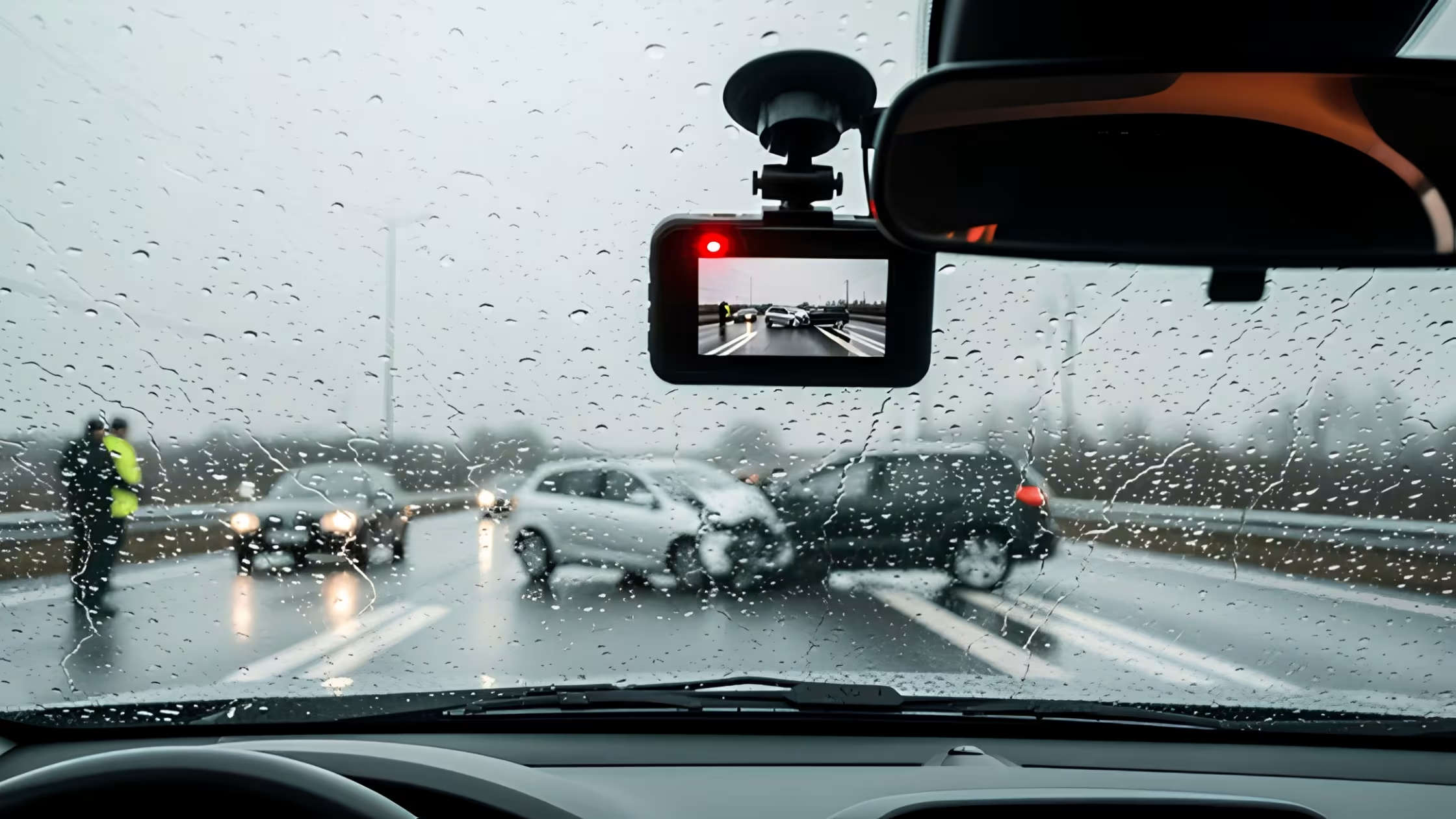
Dashcam video is often one of the most persuasive forms of accident evidence because it records events as they happened. Unlike witness memory, which can fade or conflict, video can show vehicle position, speed, braking, lane changes, traffic signals, and road conditions. In many claims, that objective record can quickly narrow the fault dispute.
Dashcam evidence can also help prevent insurance companies from relying on inaccurate assumptions. When a claimant has clear footage, it may become easier to show that another driver acted carelessly or violated traffic laws. That can be especially valuable in serious injury cases, disputed liability cases, and hit-and-run matters.
How Video Helps Prove Liability
A strong dashcam recording may support the central facts needed in a negligence claim: duty, breach, causation, and damages. If the footage shows a driver running a red light, making an unsafe lane change, tailgating, or causing a rear-end collision, it can directly support fault. If the footage captures the moments before impact, it can also help explain why the crash happened.
For readers dealing with a dashcam car accident claim, the video may reduce the need to rely only on conflicting statements from the drivers involved. It can also be used alongside photos, vehicle damage reports, witness statements, medical records, and the police report. In practice, that combination often strengthens the entire liability narrative.
Police Reports and Dashcam Video
Police reports are important, but they are not always perfect. Officers usually arrive after the collision and must piece together what happened based on statements, scene observations, and available evidence. That means the report may not capture every detail or may reflect an incomplete version of events.
That is why dashcam footage police report comparisons can matter in a claim. If the video confirms what was reported, it can strengthen credibility. If the report is inaccurate or incomplete, the footage may help correct the record and support your version of events.
What the Law Says
For dashcam evidence to be useful in litigation, it generally must be relevant, authentic, and legally obtained. Courts commonly consider whether the footage has been altered, whether timestamps or metadata support authenticity, and whether the recording was made in compliance with applicable privacy and evidentiary rules.
Federal law does not ban dashcams on public roads, but state rules can affect how audio is recorded and used. In some states, audio consent laws matter if the dashcam records conversations inside the vehicle. That is why footage should be preserved exactly as recorded and reviewed by counsel before being shared widely. If you are unsure about admissibility, a lawyer can evaluate whether the recording supports your case under the local evidence rules.
Why Speed Matters
Dashcam files can overwrite automatically if they are not saved right away. Some systems loop recordings and keep only the most recent segment. Others may overwrite critical moments if the memory card fills up or the device is reset.
That is why anyone involved in a crash should copy the footage immediately and store it in more than one place. The sooner the evidence is preserved, the lower the risk that a valuable recording will disappear. In a serious injury case, that timing can matter just as much as the footage itself.
Example From a Claim
Imagine a driver is sideswiped on a freeway and the other motorist insists the injured driver changed lanes without warning. A dashcam recording shows the other vehicle drifting across the lane marker and striking the side of the car. That single clip may resolve the liability dispute quickly and help the injured person move forward with treatment and a claim.
That is exactly why dashcam evidence can be so powerful: it turns a disagreement into something the insurer, defense lawyer, or jury can actually evaluate. For more context on how these claims fit into broader accident litigation, see our main service page on automobile accidents. You may also find our article on the most common personal injury cases in California helpful as a related overview.
When Dashcam Footage Can Hurt
Dashcams are neutral. If the footage helps the other side more than it helps you, it can still be used against you. For example, if the recording shows unsafe driving, distraction, or failure to brake, it may weaken your claim.
That is why it is important to review footage carefully before sending it to the insurer. A lawyer can help identify whether the video helps, hurts, or needs context. The goal is not to hide evidence, but to present it accurately and strategically.
Common Legal Uses
Dashcam footage can support:
- Personal injury claims.
- Property damage disputes.
- Rear-end collision cases.
- Lane-change and intersection crashes.
- Hit-and-run investigations.
- Insurance coverage disputes.
- Settlement negotiations.
- Courtroom evidence in negligence lawsuits.
In many situations, the video may also help resolve claims more efficiently because it reduces uncertainty. Insurers often place greater weight on objective evidence than on conflicting recollections, especially when the footage is clear and time-stamped.
How to Protect Your Footage
If you have dashcam video after an accident, take these steps:
- Save the original file immediately.
- Make backup copies to cloud storage or an external drive.
- Do not edit, crop, or alter the video.
- Keep the device and memory card if possible.
- Share the footage only with your lawyer and insurer as needed.
These steps help preserve authenticity and avoid challenges later. If the claim becomes a lawsuit, intact original footage can carry far more weight than a compressed or edited clip.
Professional Perspective
From a plaintiff’s attorney perspective, dashcam evidence is valuable because it can protect honest victims from being blamed unfairly. In many accident claims, the biggest problem is not lack of injury, but lack of proof. A clear recording may solve that problem in seconds.
At the same time, footage should be handled carefully. A strong legal case depends on evidence, context, medical records, and consistent storytelling. When those elements work together, the claim usually becomes stronger and more credible.
Dashcam Evidence Table
Closing Thoughts
If you were injured in a crash and believe video evidence may help prove what really happened, do not wait until the footage is gone or overwritten. At Ladva Law, we understand how powerful the right evidence can be in protecting an injured person’s rights, and we are here to fight for the truth with skill, care, and determination. Contact our experts today for a free consultation and let us help turn your evidence into a stronger case.
FAQ
Q Can dashcam footage be used in claim disputes?
A: Yes, dashcam footage can often be used in accident claims if it is relevant, authentic, and legally obtained.
Q Is dashcam footage admissible in court?
A: It may be admissible if the video is unedited, properly preserved, and meets evidence rules in the jurisdiction.
Q What should I do with dashcam footage after a crash?
A: Save the original file, back it up, and share it with your attorney as soon as possible.
Q Can dashcam footage help a rear-end accident case?
A: Yes. Rear-end crashes are one of the most common situations where dashcam video can help prove fault.
Q Does dashcam footage replace a police report?
A: No. It does not replace the report, but it can support, clarify, or correct it.
Q Can dashcam footage hurt my case?
A: Yes. Because the footage is neutral, it can also show unsafe driving or conduct that weakens your claim.
Disclaimer:
The information provided on this website is for general informational purposes only and does not constitute legal advice. Case studies and past results described on this website are for illustrative purposes only and do not guarantee similar outcomes in future matters. Each legal case is unique and depends on its specific facts and circumstances. Some details in case studies may be modified to protect client privacy.