

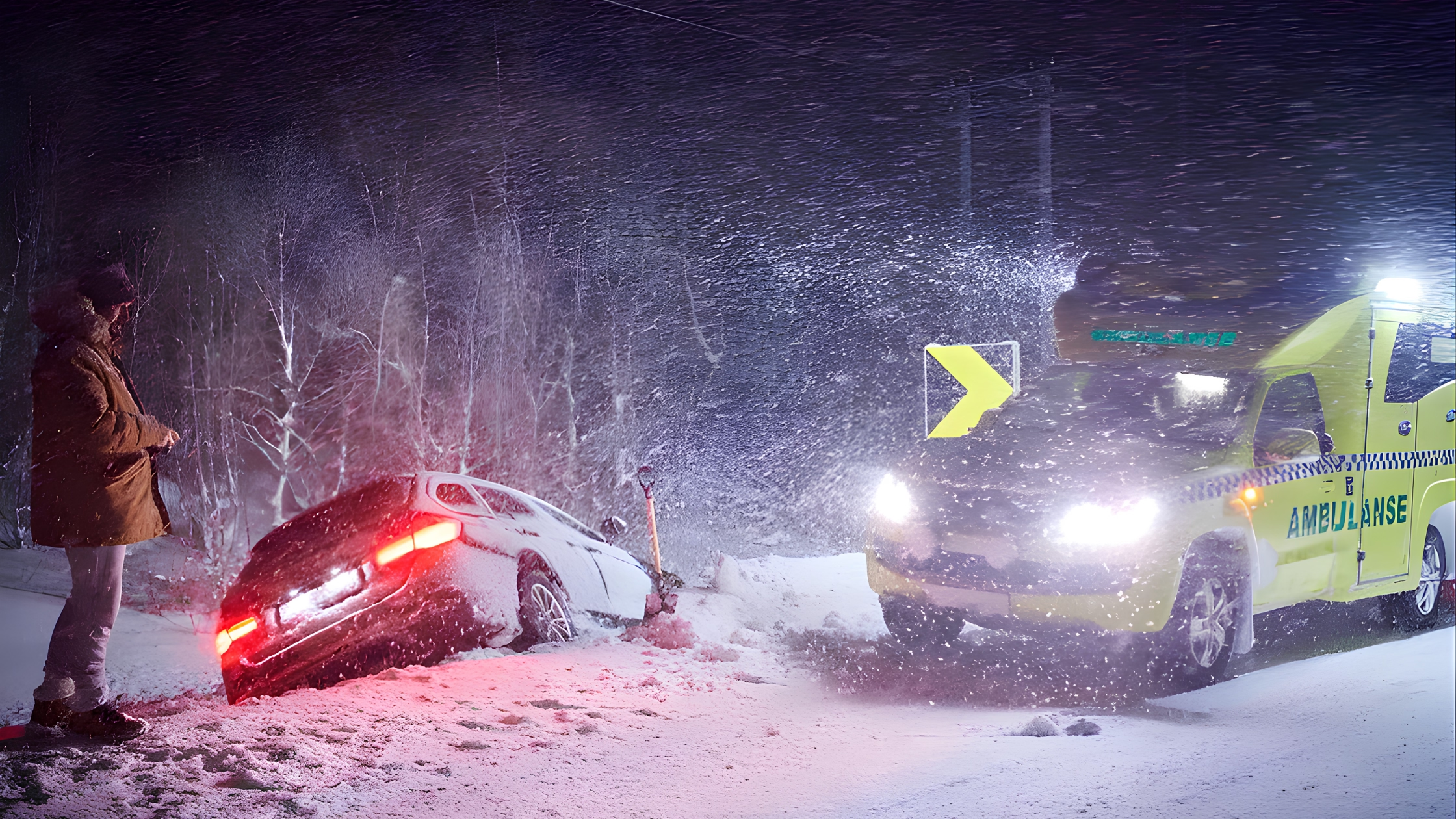
Northern California winter SUV crashes increased by 22 percent during the 2025-2026 rainy season across Sierra Nevada mountain passes and Bay Area freeways, primarily due to drivers over-relying on all-wheel drive systems during black ice and hydroplaning conditions. These dangerous incidents frequently involve popular models like Subaru Outback, Toyota RAV4, and Jeep Grand Cherokee, which represented 28 percent of seasonal traffic fatalities on key routes such as Interstate 80 through Donner Summit and Highway 50 over Echo Summit.
Caltrans data reveals 1,786 crashes on state highways in Merced County alone during this period, resulting in 33 fatalities a stark reminder that SUV size and capability create dangerous overconfidence among drivers facing Northern California's unpredictable winter weather.
This comprehensive guide serves commuters traveling daily between San Francisco and Sacramento, families heading to Lake Tahoe ski resorts, delivery drivers navigating Marin County hills, and snow tourists exploring Yosemite essentially anyone who drives larger vehicles during California's wet season. Readers will gain immediately actionable benefits including proven prevention techniques that reduce crash risk by up to 40 percent, realistic settlement value estimates for injury claims, strategic guidance for selecting experienced legal counsel, and common pitfalls that destroy compensation opportunities.
The article examines 2026 crash statistics by county and highway, physics behind SUV rollover vulnerability, California liability laws including chain control violations, real case studies with verdict amounts, federal safety standards, expert attorney selection criteria, and practical safety recommendations from a San Francisco personal injury attorney representing Northern California clients exclusively.
2026 Winter SUV Crash Statistics: Northern California Deadliest Routes
The California Department of Transportation documented dramatic increases in SUV-related collisions during winter months, with Merced County leading state highways statewide at 1,786 crashes resulting in 33 fatalities and 1,066 injuries. Madera County recorded 811 crashes with 12 deaths, while Mendocino's winding Highway 101 corridor saw 667 incidents claiming 14 lives. Interstate 5 near Shasta experienced a catastrophic 17-vehicle pileup in February 2026 that killed one driver and injured dozens, triggered by an SUV jackknifing into slower traffic during sudden snow squalls.
Sport utility vehicles consistently overrepresented in these statistics due to their higher center of gravity, which produces rollover rates 45 percent fatal compared to 25 percent for sedans in wet or icy conditions. The Tahoe region's Donner Summit ranks 94th out of 98 corridors in the Office of Traffic Safety's deadliest rankings, where alcohol and speeding compound winter hazards. Bay Area drivers underestimate slick pavement after first rains, creating 200 percent spikes in multi-vehicle SUV collisions during November through March.
Why SUVs Crash Differently in Winter: Engineering and Driver Factors
Sport utility vehicles maintain higher centers of mass than sedans typically 30 percent elevated making them 2.5 times more likely to rollover during emergency maneuvers on wet pavement. While all-wheel drive and four-wheel drive systems excel at pulling vehicles uphill through snow, they provide no braking advantage since stopping power depends entirely on tire friction regardless of drivetrain configuration. Hydroplaning becomes catastrophic above 50 miles per hour when tires cannot displace accumulating water, launching SUVs into uncontrollable slides.
Black ice proves completely undetectable even to experienced drivers, forming when temperatures hover near freezing during light drizzle, a condition responsible for 60 percent of Sierra Nevada pass fatalities. Driver overconfidence compounds engineering limitations: SUV owners consistently drive 20 percent faster than sedan drivers in adverse weather, according to crash reconstruction analysis. Panic braking triggers anti-lock systems to pulse, but high-center vehicles still fishtail violently.
For complete contributing factor analysis, our detailed resource Auto Accident Causes in California ranks winter conditions as the third leading crash trigger statewide after impaired driving and speeding, with mandatory snow chain usage saving countless lives during Tahoe corridor closures. First significant rainfalls produce 200 percent collision spikes as Bay Area drivers fail to adjust for dramatically reduced tire grip. Comprehensive driver training programs remain critically underdeveloped despite predictable seasonal patterns. Advanced driver assistance systems like automatic emergency braking show 30 percent effectiveness gains specifically during wet weather scenarios. Families bear disproportionate consequences when breadwinners suffer career-ending spinal injuries from preventable rollovers.
California SUV Collision Liability Laws: Chains, Negligence, and Claims
California Civil Code Section 1714 establishes general negligence standards requiring drivers maintain reasonable care under prevailing conditions, while the landmark Li v. Yellow Cab Co. (1975) decision created pure comparative negligence allowing injury victims recover damages proportional to other drivers' fault even 99 percent responsibility yields 1 percent compensation. Vehicle Code Sections 31510 through 31522 mandate tire chains during Sierra travel when Caltrans posts control levels, with violations constituting negligence per se and reducing plaintiff recoveries by 20-40 percent in litigation.
Rental agencies face heightened liability when providing SUVs without winter tires or chain instructions for advertised "mountain capable" vehicles, express waivers become void when agencies direct customers onto obviously unsafe roads. Federal Motor Vehicle Safety Standard 216 (49 CFR 571.216) specifically governs SUV roof crush resistance during rollover, while NHTSA five-star ratings guide jury expectations during liability disputes. Multi-vehicle accidents trigger joint and several liability, allowing full recovery from deep-pocket defendants regardless of individual fault percentages.
A compelling 2024 Placer County case demonstrates practical application: speeding SUV hydroplaned into a family minivan during chain control, producing a $4.6 million settlement despite 70 percent plaintiff fault for following too closely—yielding $1.38 million net recovery. Pure comparative doctrine preserved compensation despite substantial driver error.
Rideshare companies face unique winter exposure, as our specialized analysis Rideshare SUV Accidents in California explains how Uber and Lyft maintain $1 million primary plus $3 million excess coverage activating during winter passenger transport. Mobile application location logs provide irrefutable timeline evidence establishing platform liability when drivers violate chain controls. Passengers receive priority protection under transportation network company insurance regulations. Complex policy stacking procedures maximize total recoveries against multiple carriers. San Francisco International Airport runs to Tahoe resorts generate disproportionate claims volume during holiday periods. Understanding layered coverage proves essential for securing full compensation.
Proving Fault After SUV Rollover Incidents
Event data recorders commonly called black boxes capture critical pre-crash speed, braking pressure, stability control activation, and steering inputs essential for reconstructing fault allocation. Independent witnesses provide invaluable testimony regarding visible road conditions, posted chain requirements, and evasive maneuvers attempted by each driver. Engineering experts measure tire tread depth, test surface coefficient of friction under identical weather, and model vehicle center of gravity dynamics during rollover sequences.
Chain purchase receipts and installation photographs serve as bulletproof compliance evidence, while Caltrans maintenance logs document delayed snow plowing contributing to hazardous conditions. High-quality dashcam footage has become trial gold, preserving unedited crash sequences before memories fade or weather destroys physical evidence.
Truck versus SUV collisions present dramatically escalated consequences, as our comprehensive guide Truck SUV Accident in California details how Federal Motor Carrier Safety Administration hours-of-service violations compound winter rollover liability. Underride guard failures prove catastrophic when SUVs slide beneath tractor-trailers during icy braking, producing wrongful death claims routinely exceeding $10 million. Hours-of-service logbooks accessed through discovery reveal fatigued commercial drivers operating during prohibited winter hours. Juries consistently assign primary fault to trucking companies maintaining inadequate tire chains on heavy vehicles. Multi-party litigation coordination maximizes recovery against multiple deep-pocket defendants simultaneously.
Selecting Specialized SUV Accident Attorneys
Experienced SUV accident lawyers demonstrate specialized knowledge of rollover physics, Federal Motor Vehicle Safety Standards compliance, and winter reconstruction methodology distinguishing them from general practitioners. Reputable firms operate exclusively on contingency fee arrangements (33 to 40 percent of ultimate recovery) eliminating upfront costs for meritorious claims. Northern California juries particularly Placer and El Dorado County panels familiar with Tahoe tragedies deliver generous verdicts when presented comprehensive technical evidence.
Our authoritative resource California SUV Accident Lawyer Guide provides essential verdict track record benchmarks, investigator network requirements, and multi-disciplinary expert team composition standards essential for seven-figure recoveries. Immediate chain and tire tread preservation prevents spoliation by overzealous rental agencies. Coordination among accident re-constructionists, biomechanical engineers, and vocational economists proves essential for establishing both liability and damage quantum. Client testimonials verify firms' ability to navigate complex insurance coordination securing maximum available coverage limits.
The Guide to Choosing the Best Lawyer for Auto Accident Cases identifies critical red flags including unrealistic guaranteed settlement promises, absence of winter reconstruction experience, and failure to maintain SUV-specific engineering expert networks. Firms must demonstrate proficiency calculating economic damages incorporating seasonal employment patterns disrupted by orthopedic injuries. Comprehensive client communication protocols ensure families receive realistic case updates throughout protracted winter litigation timelines. Verified seven-figure verdicts against national rental agencies carry substantial weight during consultations.
Ladva Law's Truck and SUV Collision Expertise
For specialized representation handling the unique complexities of larger vehicle litigation, Ladva Law maintains a dedicated Truck and SUV Collisions practice securing over $20 million for Northern California clients. Our team coordinates immediate crash scene preservation including drone photography of skid patterns before snow covers evidence, while forensic meteorologists establish precise precipitation timelines absolving chain control compliance defenses. Free consultations include preliminary liability analysis and policy limit demand letter drafting essential for policy exhaustion negotiations.
Essential Prevention Strategies and Post-Crash Protocols
Caltrans mandates tire chains from November through April across Tahoe corridors, enforced through highway closures when control level 3 activates, violators face $500 fines plus towing. Headlight use during fog remains mandatory under Vehicle Code Section 24400, while winter tires demonstrate 20 percent shorter stopping distances than all-season rubber during Caltrans coefficient of friction tests. Activate air conditioning for defogging since dry heat proves three times more effective clearing windshields than defrost alone.
Position cargo low in SUVs maintaining center of gravity advantage during cornering maneuvers. Real-time applications like CHP Road 511 provide chain control updates, live webcams, and tow truck locations during whiteout conditions.
Immediate post-crash protocol proves equally critical: photograph all vehicles establishing positions before towing disrupts scene, obtain witness contact information, seek medical evaluation documenting soft tissue injuries, and avoid recorded statements absent counsel. Preserve rental agreements, chain receipts, and tire condition photographs establishing due care.
Professional Perspective: Winter SUV Litigation Realities
As a San Francisco personal injury attorney representing Northern California SUV crash victims, SUV collision cases constitute 35 percent of my winter practice volume with recent Sierra Nevada rollover producing $3.2 million gross recovery despite aggressive defense claims of 60 percent plaintiff fault. Forensic tire tread analysis reduced contributory negligence to 15 percent final allocation, preserving maximum compensation.
Winter reconstruction specialists prove indispensable distinguishing panic braking spinouts from black ice hydroplaning through coefficient of friction modeling. Families confronting permanent paraplegia from SUV rollovers deserve counsel experienced prosecuting both driver error and vehicle defect claims simultaneously.
Winter Roads Forgive No Mistakes; Northern California Families Pay Forever.
SUV confidence kills silently on black ice, Ladva Law uncovers liability truth through forensic winter reconstruction, securing justice families cannot achieve alone. Talk to us for your free consultation technical expertise transforms tragedy into accountability. Drive safe, recover fully.
Frequently Asked Questions
Q. What causes most SUV accidents during Northern California winters?
Hydroplaning above 50mph, undetectable black ice, all-wheel drive overconfidence leading to excessive speeds, absent tire chains during mandatory control levels, high center of gravity rollovers.
Q. How does California determine fault in SUV collisions?
Pure comparative negligence apportions responsibility by percentage; chain control violations constitute negligence per se reducing plaintiff recoveries 20-40 percent.
Q. When should I hire an SUV accident attorney?
Immediately following serious injuries involving disputed liability, rollover physics analysis, Federal Motor Vehicle Safety Standards compliance, or multi-vehicle fault allocation.
Q. Do utility vehicle accident attorneys handle rental SUV claims?
Specialized counsel distinguishes agency negligence from driver error, preserves chain compliance evidence, and coordinates against national rental car insurance carriers.
Q. How do I find SUV accident lawyers serving Tahoe crash victims?
Seek winter reconstruction specialists maintaining Caltrans log access, forensic meteorology networks, and proven seven-figure verdicts against rental agencies.
Q. What increases SUV rollover risk during wet weather?
Elevated centers of gravity (2.5x sedan rollover rates), panic braking triggering stability control limitations, hydroplaning when tires lose water displacement capacity.

.avif)