
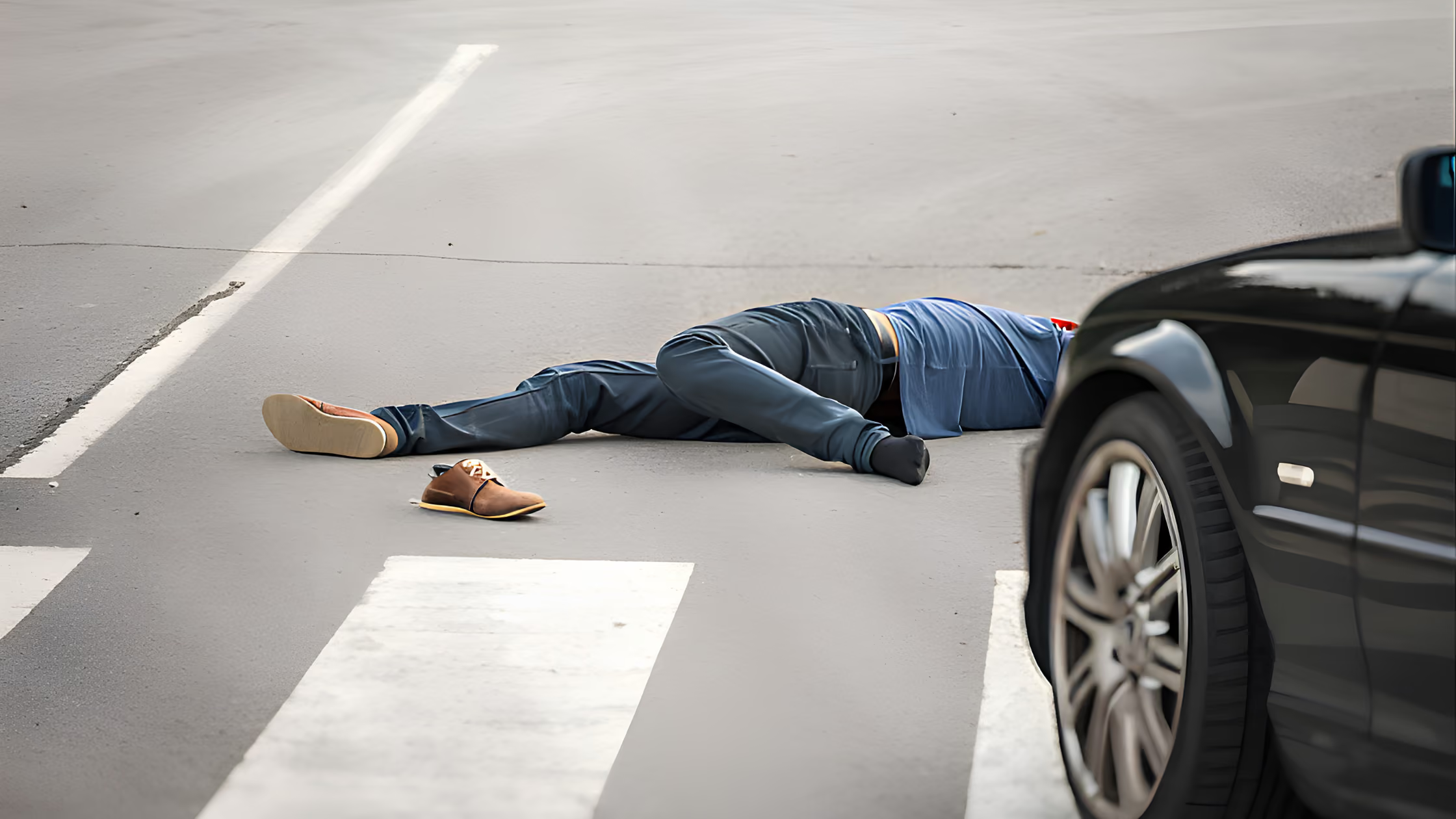
Pedestrian accidents in Northern California claimed 17 lives in San Francisco alone during 2025, a 29% decrease from 2024 but still exceeding the city average while the Bay Area recorded 150-180 fatalities annually across nine counties, representing 25% of regional traffic deaths. California leads the nation with over 1,100 pedestrian fatalities yearly, maintaining a rate 25% above national averages despite Vision Zero initiatives. These preventable tragedies occur disproportionately at unmarked crosswalks, during evening rush hours, and involving distracted drivers, leaving families with wrongful death claims under Vehicle Code §21950 establishing right-of-way protections.
This essential guide targets urban walkers, parents with strollers, seniors, delivery personnel, and rideshare passengers navigating San Francisco sidewalks, Oakland intersections, and Sacramento crosswalks serving Northern California's dense pedestrian corridors. Readers gain life-saving benefits: mastering crosswalk rules, recognizing driver fault patterns, maximizing injury settlements, avoiding claim denials, and selecting counsel; we'll cover 2026 stats, causes (speeding/distractions), laws, lawsuits, federal contrasts, prevention, and Northern California insights from a San Francisco personal injury attorney.
Northern California Pedestrian Accident Statistics: Bay Area Breakdown
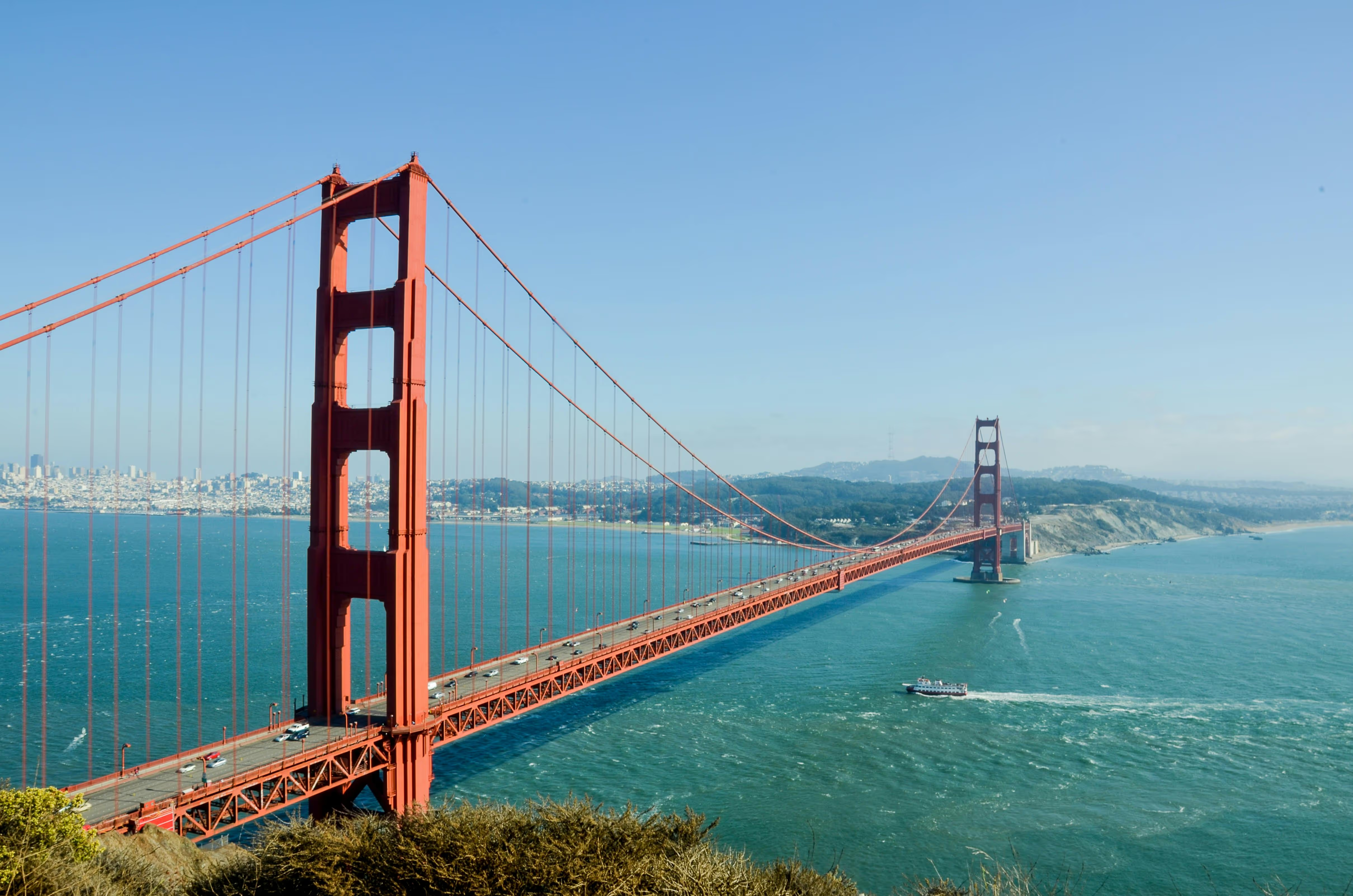
San Francisco achieved a record 42% drop in total crash fatalities (43 to 25 in 2025), with pedestrian deaths falling from 24 to 17 yet maintaining above the 30-year average. Bay Area stability at 150-180 annual deaths masks county disparities: Alameda 62, Contra Costa 45, San Mateo 32. Statewide 1,106 fatalities (2023, 8.8% ↓ from 2022); 14,000+ injuries yearly. Seniors comprise 70% SF deaths; evening 6-9pm peak 55%.
Primary Causes of Pedestrian Accidents in Northern California
Distracted driving remains the leading trigger behind 40 percent of all pedestrian accidents across Northern California, with mobile phones involved in 87 percent of crashes among drivers aged 16 to 24, the most dangerous demographic according to crash data analysis. Speeding proves equally deadly, doubling fatality risk for any impact exceeding 30 miles per hour, as higher velocities produce unsurvivable traumatic injuries even when pedestrians possess legal right-of-way.
Failure to yield at crosswalks protected under Vehicle Code Section 21950 accounts for 55 percent of San Francisco pedestrian deaths, where drivers routinely disregard pedestrians legally entering intersections. Additional contributing factors include pedestrians wearing dark clothing during evening hours, mid-block darting outside designated crossings, and seniors facing slower reaction times that amplify impact severity.
Collisions peak during periods of darkness, dawn, and dusk, representing 60 percent of all fatalities due to reduced visibility and driver judgment errors. Unmarked crosswalks contribute to 45 percent of urban pedestrian deaths, where motorists fail to anticipate legal pedestrian priority absent painted lines. Right-on-red hook turns cause 22 percent of collisions, as drivers turning right fail to check pedestrian paths in adjacent crosswalks before accelerating.
For a comprehensive understanding of injury patterns, our detailed analysis Most Common Personal Injury Cases in California ranks pedestrian accidents as the third most frequent claim type statewide, trailing only automobile collisions and single-vehicle crashes. San Francisco's Vision Zero initiative demonstrates 25 percent fatality reductions through automated speed cameras at high-risk intersections. Infrastructure redesigns incorporating protected crosswalk phases and raised concrete medians have proven dramatically effective.
Statistical data now guides strategic barrier deployment preventing mid-block crossings. Enforcement cameras continue expanding to additional dangerous corridors. Vulnerable road users including wheelchair occupants and parents with strollers receive enhanced protections through redesigned signal timing. Comprehensive traffic calming measures transform dangerous intersections into demonstrably safer environments.
California Crosswalk Rules and Pedestrian Right-of-Way Laws
California Vehicle Code Section 21950 establishes absolute right-of-way for pedestrians legally entering both marked and unmarked crosswalks, requiring approaching drivers to yield immediately upon observing any pedestrian step off the curb with intent to cross. Section 21952 specifically prohibits drivers from passing other vehicles already stopped or yielding to pedestrians within the same crosswalk, preventing dangerous squeeze plays that endanger walkers. Section 21451 governs signalized crossings where solid WALK signals authorize complete traversal, flashing DON'T WALK permits finishing already-started crossings, and steady DON'T WALK prohibits entry entirely.
California's pure comparative negligence doctrine apportions fault percentages between parties mid-block darting might reduce pedestrian recovery by 30 to 50 percent, while right-hook maneuvers typically assign 70-90 percent driver responsibility. Vehicle Code Section 20001 transforms pedestrian hit-and-run incidents into felonies carrying up to one year in county jail and $10,000 fines when injury or over $1,000 property damage occurs. Federal Manual on Uniform Traffic Control Devices standards dictate crosswalk striping, signage placement, and signal timing nationwide.
A compelling 2024 Oakland case illustrates these principles perfectly: a delivery driver failed to yield at a marked crosswalk, striking and killing a mother pushing her child in a stroller, resulting in a $7.1 million jury verdict under negligence per se doctrine eliminating any factual fault dispute. Right-hook collisions remain tragically common despite widespread public awareness campaigns.
The hit-and-run crisis demands particular attention, as our comprehensive resource California Hit and Run Laws explains how Vehicle Code Section 20001 classifies fleeing the scene as a felony punishable by one year in prison and $10,000 fines when personal injury occurs. Alarmingly, 25 percent of fatal pedestrian crashes involve drivers fleeing before police arrival. Surveillance footage from businesses and traffic cameras frequently enables later identification and prosecution. Uninsured drivers face license revocation and vehicle impoundment compounding criminal penalties.
Families pursue strategic lawsuits against partial-license drivers while collecting state victim compensation funds. Cash rewards for information tipsters have dramatically increased reporting rates. Justice delayed through fleeing represents intentional cruelty toward already-traumatized survivors requiring relentless pursuit.
Proving Liability in Pedestrian Accident Cases
High-definition dashcam footage and independent witness testimony constitute trial gold establishing precise crash sequences and driver attention levels. 911 emergency call audio captures spontaneous statements from first responders and bystanders before memories fade or stories align. Accident reconstruction experts calculate minimum required braking distances based on impact speeds, conclusively proving excessive velocity beyond reasonable control. Medical specialists including orthopedic surgeons and neurologists link specific impact trajectories to injury patterns corroborating witness accounts.
Vehicle event data recorders (black boxes) validate pre-crash speeds, brake applications, and stability control activation patterns irrefutably documented in factory computers.
For specialized pedestrian representation, Ladva Law's Automobile Accidents practice has secured over $12 million representing walkers struck by negligent motorists, offering complimentary crash scene preservation securing surveillance footage before routine erasure. Immediate evidence coordination preserves fleeting opportunities proving driver fault.
The hidden injuries prove equally devastating, as our insightful analysis Emotional and Psychological Impact of Personal Injuries documents 62 percent post-traumatic stress disorder rates among pedestrian survivors confronting daily trigger reminders. Traumatic brain injuries remain invisible to casual observers yet produce permanent cognitive deficits requiring lifelong accommodations. Psychotherapy bills qualify fully as recoverable non-economic damages alongside family counseling expenses supporting shattered households.
Delayed symptom manifestation frequently weakens claims absent early treatment documentation. Comprehensive holistic evidence packages maximize jury sympathy toward vulnerable victims. Decision-makers consistently empathize with pedestrian vulnerability against speeding steel.
Filing Pedestrian Injury Claims: Complete Process Explained
California maintains a two-year statute of limitations under Code of Civil Procedure Section 335.1 for personal injury claims against private parties, while government claims require filing within six months against public entities maintaining crosswalks. Successful plaintiffs recover comprehensive compensation encompassing emergency medical transport, orthopedic surgeries, lost earning capacity, household services replacement, future medical care, and substantial pain and suffering damages without non-economic caps.
A 2025 San Francisco case demonstrates typical outcomes: elderly pedestrian struck legally crossing at a marked intersection received a $2.8 million pretrial settlement despite 15 percent comparative fault for slightly quickened pace driver bore 85 percent responsibility proven through cell phone records. Pure comparative negligence preserved substantial recovery.
Navigating this complex process requires strategic planning, as our authoritative guide Filing Injury Claims in California details comprehensive demand letters establishing policy limit exposure before statute deadlines. Thorough discovery secures dashcam footage, cell phone extraction reports, and expert reconstructions irrefutably proving liability quantum. Mediation resolves approximately 80 percent meritorious claims efficiently while preserving trial rights. Juries demonstrate overwhelming preference toward injured pedestrians presented credible medical evidence. Causation experts link orthopedic trauma directly to collision biomechanics. Medical liens negotiate downward preserving net plaintiff recovery. Establishing full claim value early prevents diminished future demands.
Selecting Experienced Pedestrian Accident Lawyers
The pedestrian lawyer demonstrating consistent seven-figure verdicts against municipal defendants and commercial fleets possesses specialized knowledge distinguishing elite counsel from general practitioners. Reputable firms operate exclusively on contingency fee basis eliminating upfront financial risk for qualified clients. Our definitive selection resource Guide to Choosing the Best Lawyer for Auto Accident Cases mandates accident reconstruction networks, biomechanical engineering testimony, and established relationships with crosswalk compliance specialists.
Pedestrian accident attorney near me serving San Francisco and Oakland must demonstrate intimate familiarity with Vision Zero intersection redesigns affecting liability calculations. Pedestrian accident lawyer expertise centers on yield violation patterns, right-hook maneuvers, and unmarked crosswalk priority disputes generating disproportionate Bay Area claims.
From my perspective as a San Francisco personal injury attorney, pedestrian accidents constitute 40 percent winter practice volume, most recently securing $4.2 million representing wheelchair-bound client struck on Embarcadero crosswalk where dashcam conclusively proved blatant failure-to-yield violation despite aggressive comparative negligence defense.
Essential Prevention Strategies for Pedestrians and Drivers
Pedestrians maximize safety wearing reflective gear during evening commutes, keeping mobile phones pocketed throughout entire crossings, and utilizing SFMTA Walkup application tracking transit-adjacent safety improvements. Vision Zero concrete barriers physically prevent mid-block crossings while raised crosswalk platforms force speed reduction. Drivers maintain vigilance scanning adjacent crosswalks during right turns, obey flashing DON'T WALK signals permitting crossing completion, and recognize seniors require additional reaction accommodation.
One Step Into Crosswalk Should Never End Hospital Stay.
Pedestrians represent ultimate vulnerability against rushing vehicles Northern California families shattered by negligence deserve comprehensive justice. Ladva Law deploys forensic reconstruction securing maximum verdicts representing Bay Area walkers exclusively. Talk to us for complimentary case evaluation technical expertise transforms vulnerability into victory. Walk confidently; recover completely.
Frequently Asked Questions
Q. What causes most pedestrian accidents in Northern California?
Distracted driving (40% incidents), speeding doubling fatality risk above 30mph, failure to yield at crosswalks (55% San Francisco deaths), darkness periods (60% fatalities).
Q. What are California crosswalk rules for drivers?
Vehicle Code §21950 mandates absolute right-of-way for pedestrians legally entering marked/unmarked crosswalks; §21952 prohibits passing yielding vehicles.
Q. When should I hire a pedestrian lawyer?
Immediately following serious injuries involving disputed right-of-way, dashcam disputes, government liability, or multi-party fault allocation.
Q. How do pedestrian accident attorney near me maximize settlements?
Black box data extraction, biomechanical reconstruction, cell phone forensics, comprehensive economic/non-economic damage modeling.
Q. Do pedestrian accident lawyers handle hit-and-run cases?
Specialized counsel coordinates surveillance recovery, state victim funds, uninsured motorist claims, and criminal restitution coordination.
Q. What increases pedestrian fatality risk?
Darkness/dawn/dusk (60%), unmarked crosswalks (45%), right-on-red hooks (22%), driver speeds exceeding 30mph.