
Navigating San Francisco safely starts with knowing where the risks are. San Francisco's iconic hills, bustling neighborhoods, and heavy traffic make it one of California's most vibrant cities but they also contribute to some of the state's most challenging driving conditions. Every day, thousands of motorists, cyclists, pedestrians, and rideshare vehicles share the same roads, increasing the likelihood of collisions at busy intersections. If you've been injured in one of the city's San Francisco dangerous intersections, understanding why these locations experience frequent crashes can help protect both your safety and your legal rights. In this guide, we'll explore San Francisco's most hazardous intersections, the common causes of crashes, applicable California traffic laws, and the steps accident victims should take after a collision.
Why Are Certain San Francisco Intersections So Dangerous?
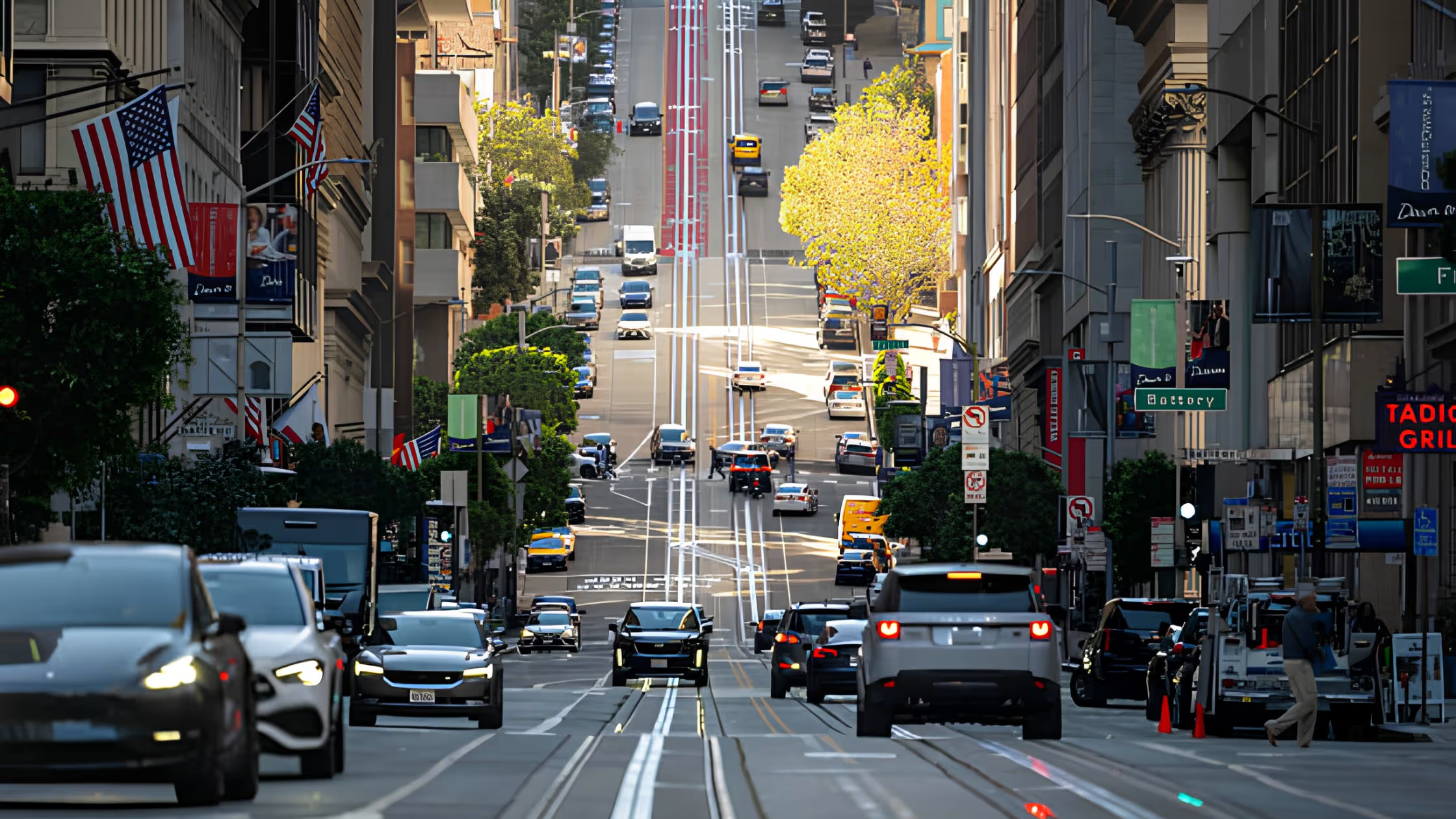
Unlike many American cities built on flat terrain and wide roadways, San Francisco presents unique driving challenges.
Several factors contribute to higher accident rates, including:
- Steep hills that reduce visibility.
- Heavy commuter traffic.
- Frequent pedestrian crossings.
- Cable cars, buses, and Muni transit routes.
- High tourist activity.
- Dense bicycle traffic.
- Narrow streets and closely spaced intersections.
Combined, these factors create environments where even a brief moment of distraction can result in serious collisions.
The Most Dangerous Intersections in San Francisco
Traffic safety studies and collision reports have consistently identified several intersections where crashes occur more frequently than others. While accident patterns change over time, the following locations are widely recognized as areas requiring extra caution.
These intersections often experience a combination of vehicle, bicycle, and pedestrian traffic, making defensive driving especially important.
Understanding San Francisco Crash Hotspots
Not every collision occurs because of reckless driving. Many San Francisco crash hotspots share common characteristics that increase crash potential regardless of driver experience.
High Traffic Volume
Intersections connecting major commuter corridors naturally experience greater congestion.
More vehicles create:
- Increased stop-and-go traffic
- More lane changes
- Reduced reaction times
- Higher potential for rear-end collisions
Complex Intersection Design
Some intersections require drivers to navigate:
- Multiple left-turn lanes
- Protected bicycle lanes
- Transit-only lanes
- Pedestrian scramble crossings
- Unusual traffic signal patterns
Drivers unfamiliar with these layouts may hesitate or make sudden maneuvers that contribute to collisions.
Distracted Driving
According to the National Highway Traffic Safety Administration (NHTSA), distracted driving remains one of the leading contributors to traffic crashes nationwide.
Common distractions include:
- Mobile phones
- GPS navigation
- Passenger conversations
- Eating while driving
- In-vehicle technology
Even a few seconds of inattention can have serious consequences in busy urban intersections.
Pedestrian Safety Remains a Major Concern
San Francisco consistently ranks among California's most walkable cities. While this benefits residents and visitors alike, it also increases the potential for vehicle-pedestrian collisions.
Many pedestrian accidents San Francisco occur because of:
- Drivers failing to yield in crosswalks
- Right-turn conflicts
- Left-turn blind spots
- Speeding through yellow lights
- Distracted driving
- Poor nighttime visibility
Pedestrians are especially vulnerable because they lack the physical protection afforded to vehicle occupants. Even low-speed impacts can result in fractures, traumatic brain injuries, or other life-altering conditions.
The Most Common Types of Intersection Accidents
Intersection collisions can take many forms depending on the circumstances.
Left-Turn Accidents: Drivers turning left must typically yield to oncoming traffic unless protected by a green arrow. ****Failure to yield often results in severe side-impact collisions.
Rear-End Collisions: Heavy traffic frequently causes sudden stops. ****Following too closely can result in rear-end crashes, particularly during rush hour.
T-Bone (Side-Impact) Collisions: One of the most dangerous types of intersection crashes occurs when a driver runs a red light or fails to obey a stop sign. ****These collisions frequently produce serious injuries because the sides of passenger vehicles provide less protection than the front or rear.
Bicycle Accidents: San Francisco's growing cycling infrastructure has improved mobility, but bicycle collisions remain a concern where motorists fail to check blind spots or yield while turning.
California Traffic Laws That Help Protect Road Users
California law establishes clear responsibilities for drivers approaching intersections.
Some important legal principles include:
Right-of-Way Rules
Drivers must:
- Yield to pedestrians lawfully within crosswalks.
- Obey traffic control devices.
- Yield when making left turns unless they have the right of way.
- Exercise reasonable care to avoid collisions.
Failure to follow these rules may constitute evidence of negligence in a personal injury claim.
Comparative Negligence
California follows a pure comparative negligence system. This means an injured person may still recover compensation even if they share some responsibility for the accident. Any recovery is generally reduced by their percentage of fault rather than being barred altogether.
Common Injuries Seen in Intersection Collisions
The severity of injuries often depends on vehicle speed, angle of impact, and whether pedestrians or cyclists are involved.
Frequently reported injuries include:
Prompt medical evaluation not only protects your health but also creates important documentation that may support a future personal injury claim.
Many Intersection Crashes Lead to Personal Injury Claims
Intersection collisions frequently result in significant medical expenses, lost income, and long-term rehabilitation. Depending on the circumstances, injured individuals may pursue compensation through a personal injury claim against the at-fault party.
If you'd like to learn more about the types of accident cases commonly handled under California personal injury law, explore our detailed guide: Top 10 Most Common Personal Injury Cases in California (2026 Guide). Understanding the broader landscape of personal injury claims can help accident victims better recognize their legal rights after an intersection collision.
What to Do After an Intersection Accident in San Francisco
The moments following an intersection collision can be overwhelming, but the steps you take may significantly affect both your recovery and any future legal claim.
If you're involved in one of the city's San Francisco intersection accidents, consider the following:
- Call 911 and report the accident.
- Seek immediate medical attention, even if injuries seem minor. Some injuries, such as concussions or internal trauma, may not be immediately apparent.
- Document the scene by taking photographs of the vehicles, traffic signals, skid marks, road conditions, and visible injuries, if it is safe to do so.
- Exchange information with all involved drivers, including insurance and contact details.
- Collect witness information, as independent witness statements can be valuable evidence.
- Avoid admitting fault or speculating about how the accident occurred.
- Consult an experienced attorney before accepting a settlement offer from an insurance company.
Taking these steps can help preserve evidence and protect your legal rights.
How Insurance Companies Investigate Intersection Crashes
Insurance adjusters begin evaluating claims almost immediately after an accident. Their investigation may include:
- Reviewing police collision reports
- Examining vehicle damage
- Interviewing drivers and witnesses
- Obtaining surveillance or traffic camera footage
- Reviewing photographs and videos
- Evaluating medical records
- Analyzing applicable traffic laws
In some cases, insurers may attempt to argue that the injured person was partially responsible for the collision. Because California follows a pure comparative negligence system, establishing the facts through strong evidence is essential to maximizing a claim.
Why Evidence Can Make or Break Your Case
Successful personal injury claims are built on credible, well-documented evidence rather than assumptions.
Important evidence may include:
The stronger the evidence, the stronger your negotiating position with the insurance company.
When Should You Contact a San Francisco Car Accident Lawyer?
Not every traffic collision requires legal representation. However, legal guidance becomes especially important when:
- You suffered serious injuries.
- Liability is disputed.
- Multiple vehicles were involved.
- A pedestrian or cyclist was struck.
- An insurance company denies or undervalues your claim.
- Future medical treatment or lost earning capacity is anticipated.
An experienced attorney can investigate the accident, preserve evidence, communicate with insurers, calculate damages, and advocate for fair compensation while you focus on your recovery.
How LADVA Law Helps Northern California Accident Victims
At LADVA Law, we understand that an intersection collision can disrupt every aspect of your life. Medical appointments, missed work, vehicle repairs, and insurance negotiations can quickly become overwhelming.
Our attorneys proudly represent accident victims throughout Northern California, helping clients pursue compensation for injuries caused by negligent drivers. We thoroughly investigate each claim, gather critical evidence, work with qualified experts when necessary, and negotiate aggressively with insurance companies. If a fair settlement cannot be reached, we are fully prepared to advocate for our clients in court.
To learn more about how we help individuals injured in motor vehicle collisions, visit our Automobile Accidents practice page. There, you'll find additional information about the claims process, recoverable damages, and how our team supports clients from the initial consultation through the resolution of their case.
An Attorney's Perspective
As personal injury attorneys serving communities across Northern California, we've seen firsthand how intersection crashes can change lives in an instant. Many collisions occur because of preventable behaviors like speeding through yellow lights, distracted driving, failing to yield, or ignoring pedestrian right-of-way. Unfortunately, the consequences often fall on innocent victims who are left dealing with physical pain, emotional hardship, and financial uncertainty.
Our philosophy is straightforward: every client deserves to be heard, every case deserves a thorough investigation, and every insurance company should be held accountable when it fails to treat injured individuals fairly. Preparation, communication, and persistent advocacy remain the foundation of every case we handle.
Conclusion
San Francisco's busiest intersections present unique challenges for drivers, cyclists, and pedestrians alike. While no one can eliminate every risk on the road, understanding where collisions commonly occur and why, can help you make safer decisions behind the wheel or while crossing the street.
If you or a loved one has been injured because another driver acted negligently, understanding your legal rights is just as important as receiving proper medical care. Acting promptly, preserving evidence, and seeking experienced legal guidance can make a meaningful difference in the outcome of your claim.
A serious intersection accident can leave you with lasting injuries, unexpected expenses, and difficult questions about the future. You don't have to navigate those challenges alone.
At LADVA Law, we're committed to helping accident victims throughout Northern California pursue the compensation they deserve with compassion, integrity, and determined advocacy. Whether your injuries resulted from a collision at one of San Francisco's busiest intersections or elsewhere in the region, our team is ready to help you understand your options and protect your rights.
FAQ
Q Which intersections in San Francisco have the highest number of accidents?
A: Busy corridors such as Market Street, Van Ness Avenue, Geary Boulevard, Mission Street, and 19th Avenue are frequently identified in collision analyses because of heavy traffic volumes, complex traffic patterns, and significant pedestrian activity.
Q What causes most intersection accidents in San Francisco?
A: Common causes include distracted driving, speeding, failure to yield the right-of-way, unsafe left turns, running red lights, and poor visibility created by congestion or the city's hilly terrain.
Q What should I do if I was injured in an intersection accident?
A: Seek medical attention immediately, report the accident to law enforcement, preserve evidence, avoid discussing fault, and consider consulting a personal injury attorney before accepting a settlement offer.
Q Can pedestrians recover compensation after being hit at an intersection?
A: Yes. Pedestrians injured because of a driver's negligence may be entitled to pursue compensation for medical expenses, lost wages, pain and suffering, and other damages, depending on the circumstances.
Q How is fault determined in an intersection accident?
A: Fault is established by examining evidence such as police reports, witness statements, traffic camera footage, vehicle damage, applicable traffic laws, and, in some cases, expert accident reconstruction.
Q How long do I have to file a personal injury claim in California?
A: In most cases, California's statute of limitations for personal injury claims is two years from the date of the injury, although exceptions may apply. Prompt legal advice helps ensure important deadlines are met.
Disclaimer:
The information provided on this website is for general informational purposes only and does not constitute legal advice. Case studies and past results described on this website are for illustrative purposes only and do not guarantee similar outcomes in future matters. Each legal case is unique and depends on its specific facts and circumstances. Some details in case studies may be modified to protect client privacy.
.avif)