

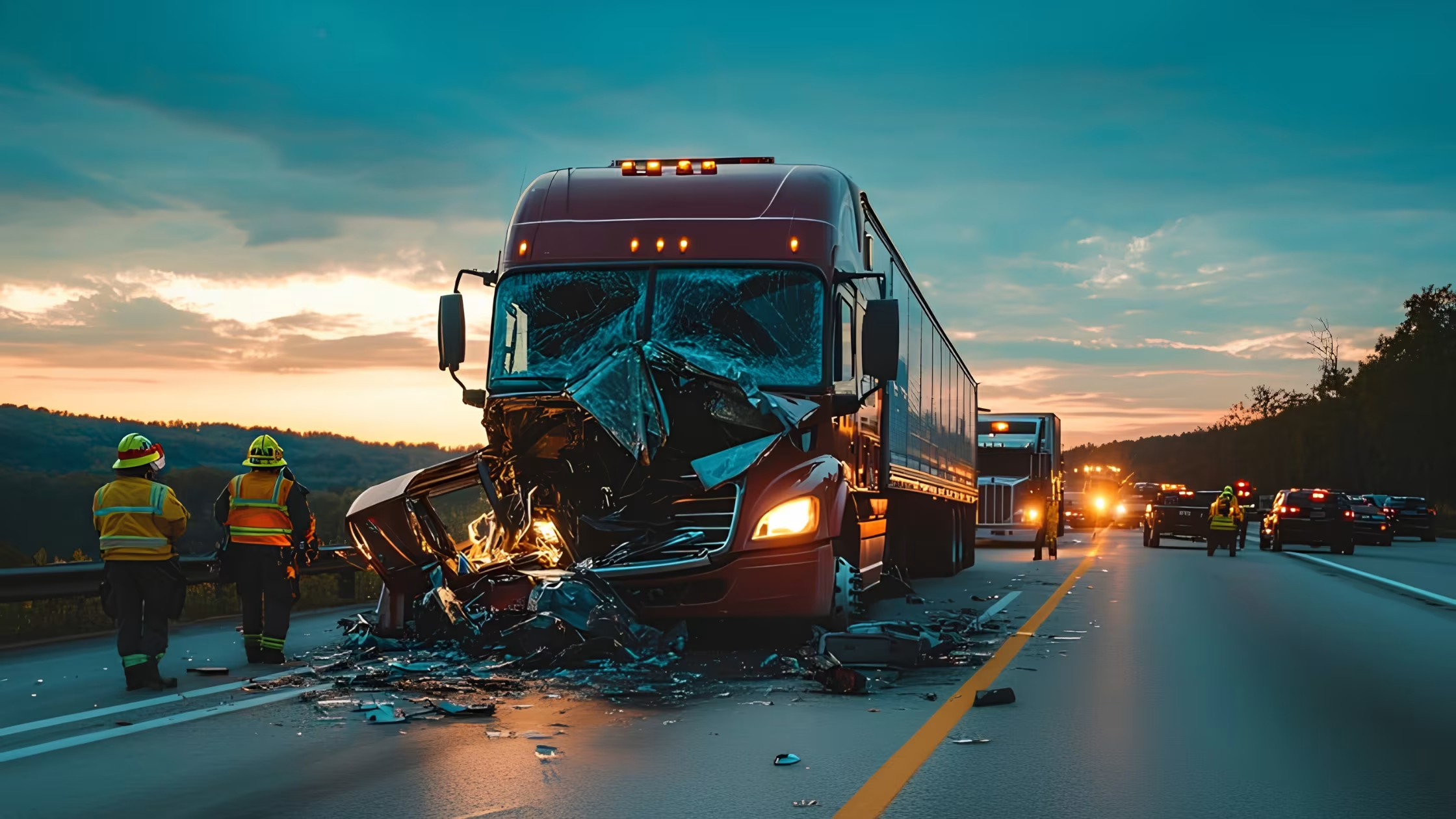
A bus accident can leave victims facing painful injuries, mounting medical bills, lost income, and uncertainty about what to do next. Unlike a typical car crash, bus accident claims often involve multiple parties, government agencies, commercial insurance policies, and complex legal procedures. Understanding Who is liable in a bus accident is essential to protecting your rights and making informed decisions after a collision.
Whether you were injured as a passenger, pedestrian, cyclist, or occupant of another vehicle, this guide is designed to help you understand when you can sue a bus company, what evidence strengthens your claim, the compensation that may be available, and how California law affects your case. We'll also explain why bus accident claims are often more complicated than standard auto accident cases and how experienced legal representation can help level the playing field.
Can You Sue a Bus Company After an Accident?
In many cases, yes. If a bus company, its driver, or another responsible party acted negligently and caused your injuries, California law may allow you to pursue compensation.
However, the legal process depends largely on who owns and operates the bus.
Private Bus Companies
Claims involving charter buses, tour buses, shuttle services, school buses operated by private companies, and corporate transportation providers generally proceed as personal injury claims against private entities. These cases typically involve commercial insurance policies and negligence principles under California law.
Public Transit Agencies
Claims involving public transportation systems such as city buses or municipal transit agencies often follow different legal procedures. If the bus is operated by a government entity, California's Government Claims Act generally requires injured individuals to submit an administrative claim within a specific timeframe before filing a lawsuit. Missing this deadline may affect your ability to pursue compensation.
Because these procedural requirements differ from ordinary personal injury claims, seeking legal guidance promptly is particularly important.
Common Causes of Bus Accidents
Although buses are among the safest forms of public transportation, accidents still occur. Many are preventable and result from negligence by drivers, transportation companies, maintenance providers, or even other motorists.
Some of the most common causes include:
One of the most significant contributing factors is bus driver negligence, which may include distracted driving, failure to yield, improper lane changes, running red lights, or operating a vehicle while fatigued. Transportation companies have a responsibility to hire qualified drivers, provide appropriate training, and enforce safe driving practices.
Who Can Be Held Liable After a Bus Accident?
Determining liability is rarely straightforward. Unlike many passenger vehicle collisions, bus accident claims frequently involve multiple potentially responsible parties.
Possible defendants include:
1. The Bus Driver
If the driver failed to operate the bus with reasonable care, they may be held responsible for the accident. Examples include distracted driving, reckless behavior, speeding, or violating traffic laws.
2. The Bus Company
Employers may be legally responsible for the actions of their employees under certain circumstances. Additionally, a transportation company may be independently liable for:
- Negligent hiring
- Inadequate driver training
- Poor supervision
- Failure to maintain vehicles
- Ignoring known safety concerns
Understanding Who is liable in a bus accident often requires reviewing employment records, maintenance logs, surveillance footage, driver qualifications, and accident reconstruction evidence.
3. Government Agencies
If the accident involved a municipal or public transit bus, the operating agency may bear responsibility if negligence contributed to the collision. Claims against public entities are subject to special procedural rules and deadlines.
4. Maintenance Contractors
Many transportation companies outsource vehicle inspections and repairs. If faulty maintenance contributed to brake failure, steering problems, or tire defects, a third-party maintenance provider may also be liable.
5. Vehicle or Parts Manufacturers
When a defective component contributes to an accident, the manufacturer of the bus or its parts may face liability under California product liability law.
California Laws That Affect Bus Accident Claims
Several important legal principles may affect your case.
Comparative Negligence
California follows a pure comparative negligence system. This means an injured person may still recover damages even if they are partially responsible for the accident. Any compensation awarded is generally reduced by the individual's percentage of fault.
Government Claims Act
When a government-operated bus is involved, California law generally requires an administrative claim to be filed before a lawsuit may proceed. These claims often have much shorter deadlines than ordinary personal injury cases, making early legal advice especially valuable.
Duty of Care
Bus companies and drivers owe passengers and other road users a duty to exercise reasonable care under the circumstances. Public transportation providers may also have heightened responsibilities because they transport members of the public.
Evidence commonly used to establish negligence includes:
- Police reports
- Driver logs
- Maintenance records
- Surveillance footage
- Witness statements
- Electronic vehicle data
- Expert accident reconstruction
Learn More About Bus Accident Cases
Every bus accident is different, and understanding your legal options begins with knowing the type of vehicle involved and the circumstances surrounding the crash. If your accident involved a San Francisco Muni bus or another public transportation vehicle, explore our dedicated Muni Bus Accident practice page for more information about how these cases are handled.
You can also learn more about common causes of public transit collisions and the legal issues unique to these claims in our related article: San Francisco Muni Bus Accidents: Common Causes, Injuries, and Legal Rights. These resources provide additional guidance for injured passengers, pedestrians, cyclists, and motorists navigating the aftermath of a bus accident.
What Compensation Can You Recover After a Bus Accident?
If another party's negligence caused your injuries, California law may allow you to pursue bus accident compensation for both financial losses and the personal impact the accident has had on your life.
Depending on the facts of your case, recoverable damages may include:
The value of every claim depends on several factors, including the severity of your injuries, available insurance coverage, the strength of the evidence, and the degree of negligence involved.
How Long Do You Have to Sue a Bus Company?
One of the most common questions we hear is How long do I have to sue a bus company?
The answer depends on who operated the bus.
If the Bus Was Privately Owned
Most personal injury claims in California are subject to the statute of limitations set forth in California Code of Civil Procedure § 335.1, which generally provides two years from the date of the injury to file a lawsuit.
If the Bus Was Operated by a Government Agency
Claims involving public transit agencies often follow different procedures under the California Government Claims Act. In many cases, an administrative claim must first be submitted within a much shorter timeframe before a lawsuit can be filed.
Because missing a filing deadline can affect your legal rights, speaking with an attorney as soon as possible is often the safest course of action.
Why Bus Accident Claims Are More Complex Than Car Accident Cases
At first glance, a bus accident may seem similar to a standard motor vehicle collision. In reality, these claims often involve significantly more legal and factual issues.
Some of the additional complexities include:
- Multiple potentially liable parties
- Commercial insurance policies
- Government immunity rules
- Vehicle maintenance records
- Driver qualification files
- Surveillance video
- Event data recorders
- Federal and state transportation regulations
- Public records requests
If you'd like to learn more about why these cases require a different legal approach, read our detailed guide: Why Bus Accident Claims Are More Complex Than Car Crash Claims In Northern California
Don't Let Insurance Companies Decide What Your Claim Is Worth
Insurance adjusters often begin investigating immediately after a serious bus accident. While they may appear helpful, their primary role is to evaluate claims on behalf of the insurance company. Before accepting any settlement or providing a recorded statement, it's important to understand your legal rights and the potential value of your claim.
To learn more about how insurance companies evaluate bus accident cases, visit: Dealing with Insurance Adjusters After a Bus Accident: What You Should Expect. Being informed can help you avoid common mistakes that may affect your ability to recover fair compensation.
An Attorney's Perspective from Ladva Law
At Ladva Law, we've seen firsthand how a serious bus accident can affect every aspect of a person's life. Beyond the physical injuries, many clients face lost wages, mounting medical expenses, uncertainty about their future, and the stress of dealing with insurance companies or government agencies.
One of the most important lessons we've learned is that successful bus accident cases are built on evidence not assumptions. Investigating these claims often requires obtaining surveillance footage, preserving maintenance records, reviewing driver training and employment files, interviewing witnesses, and consulting accident reconstruction experts when appropriate.
Whether your accident involved a municipal transit system, a charter bus, a school bus, or a private transportation company, every case deserves careful preparation and personalized legal strategy. Our goal is simple: help injured individuals throughout Northern California understand their rights, protect their interests, and pursue the compensation they may be entitled to under California law.
What Should You Do Immediately After a Bus Accident?
The steps you take after an accident can have a significant impact on both your recovery and your legal claim.
✔ Seek Medical Care: Even if injuries appear minor, prompt medical evaluation protects both your health and your documentation.
✔ Report the Accident: Notify law enforcement or the appropriate transit authority and request a copy of any incident report.
✔ Preserve Evidence: Take photographs of the accident scene, vehicle damage, visible injuries, road conditions, and any identifying information for the bus involved.
✔ Gather Witness Information: Independent witnesses can provide valuable testimony regarding how the collision occurred.
✔ Consult an Attorney Early: Evidence such as surveillance footage and electronic vehicle data may only be retained for a limited period. Early legal involvement helps preserve important information.
Final Thoughts
A bus accident can leave victims with far more than physical injuries, it can create financial strain, emotional hardship, and uncertainty about the future. Understanding your legal rights, identifying the responsible parties, and taking timely action can make a meaningful difference in protecting your interests.
Whether the accident involved a public transit agency, a private charter company, or another commercial carrier, every case deserves a careful legal evaluation. The sooner evidence is preserved and the facts are investigated, the stronger your position may be when seeking compensation.
When you're recovering from a bus accident, you shouldn't have to navigate complex legal procedures alone.
At Ladva Law, we proudly represent injury victims throughout Northern California, providing compassionate guidance and strategic advocacy from the initial consultation through the resolution of a claim. We understand the unique challenges bus accident cases present and are committed to helping clients pursue the compensation they deserve.
If you or a loved one has been injured in a bus accident, contact Ladva Law to discuss your situation. Our team is ready to answer your questions, explain your legal options, and help you move forward with confidence.
FAQ
Q Can I sue a bus company if I was a passenger?
A: Yes. If your injuries resulted from negligence by the bus company, driver, another motorist, or another responsible party, you may have grounds to pursue a personal injury claim.
Q Who is liable in a bus accident involving multiple vehicles?
A: Liability depends on the facts of each case. Potentially responsible parties may include the bus driver, the transportation company, another motorist, a maintenance contractor, a government agency, or even a vehicle manufacturer. A thorough investigation is often necessary to determine fault.
Q What evidence is important after a bus accident?
A: Police reports, medical records, witness statements, surveillance footage, maintenance records, photographs, and expert opinions can all play an important role in establishing liability.
Q Can I recover lost wages after a bus accident?
A: Yes. If your injuries prevented you from working, you may be able to recover compensation for lost income and, in some cases, reduced future earning capacity.
Q What if the bus driver was negligent?
A: If bus driver negligence contributed to the accident, both the driver and, depending on the circumstances, the transportation company may be held legally responsible. Evidence such as traffic camera footage, onboard video, driver records, and witness testimony can be critical in establishing liability.
Q How long do I have to sue a bus company if it was a city bus?
A: Claims involving government-operated buses often have shorter notice requirements than claims against private companies. Because deadlines vary depending on the circumstances, consulting an attorney promptly is recommended.
Q What does bus accident compensation typically include?
A: Compensation may include medical expenses, rehabilitation costs, lost wages, reduced earning capacity, pain and suffering, property damage, and, where applicable, future medical care or wrongful death damages.
Disclaimer:
The information provided on this website is for general informational purposes only and does not constitute legal advice. Case studies and past results described on this website are for illustrative purposes only and do not guarantee similar outcomes in future matters. Each legal case is unique and depends on its specific facts and circumstances. Some details in case studies may be modified to protect client privacy.
.avif)