

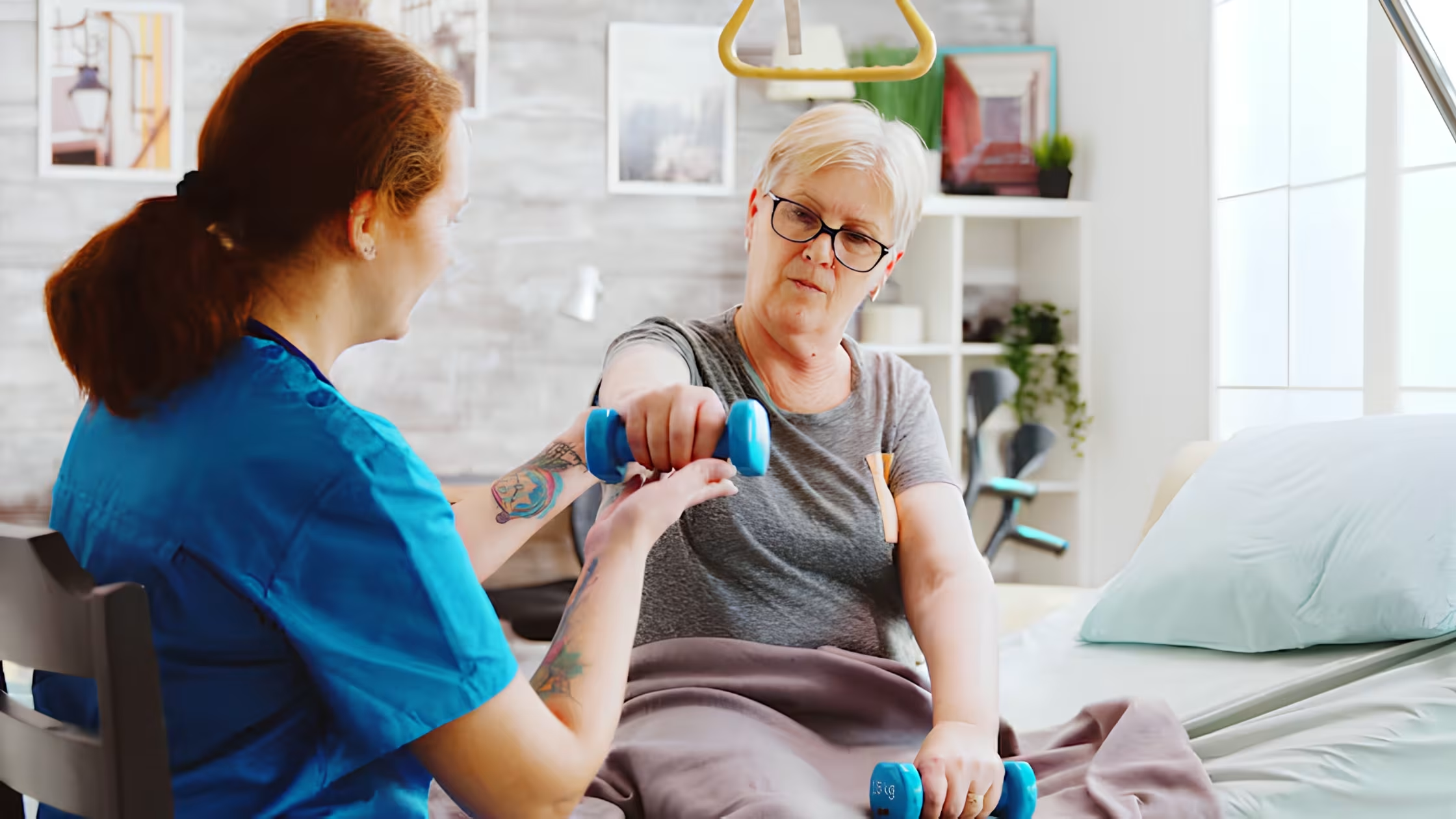
After a serious accident, recovery may require more than doctor visits and physical therapy, it may mean needing another person to help with bathing, dressing, medication, mobility, meals, or everyday activities. Understanding whether those expenses can become part of a caregiver cost claim is important for injured Californians and their families, particularly after traumatic brain injuries or other life-changing injuries. This guide explains who may ultimately pay for caregiver services, when family-provided care may qualify for compensation, how California law treats past and future care, what evidence strengthens a claim, and how federal law can matter in limited circumstances.
When an Accident Changes More Than Your Health
A collision can turn an independent person into someone who needs daily assistance. That assistance may come from a professional home-health aide, a relative, spouse, or friend.
The key question is not simply, “Did you pay a caregiver?”
The more important question is: Did the accident-related injury reasonably create a need for care, and can that need and its value be proven?
California law generally allows compensation for detriment proximately caused by a wrongful act. California Civil Code §3333 provides the basic rule for compensatory damages. Importantly, caregiver services do not necessarily become uncompensated merely because a family member provides them.
Can Family Members Be Compensated for Care?
Yes. California appellate authority recognizes that the reasonable value of necessary nursing or attendant services may be recoverable even when family members provide the care without an agreement or expectation of payment.
In Hanif v. Housing Authority (1988), the court upheld an award for home attendant care provided by the injured person's parents. The award was based on the reasonable value of comparable nursing and attendant services.
Similarly, Arambula v. Wells (1999) discussed California decisions allowing recovery for gratuitous medical care, including family-provided attendant services.
This distinction matters. A family caregiver may not send an invoice, but the care can still represent a real economic loss attributable to the injury.
What Can Caregiver Compensation Potentially Cover?
For future medical expenses, California's Judicial Council jury instructions require proof that the plaintiff is reasonably certain to need the future care and that its reasonable cost can be established.
Brain Injuries Can Make Care Costs Especially Significant
Traumatic brain injuries can create needs that are less visible than broken bones but potentially much more persistent. A person may appear physically capable while experiencing memory problems, impaired judgment, personality changes, difficulty communicating, or an inability to safely manage daily activities.
That is why brain injury caregiver compensation may involve more than traditional nursing expenses. The evidence may need to establish the level of supervision required, how frequently assistance is necessary, and whether those needs are expected to continue.
For example, California courts have recognized substantial future attendant-care awards in serious injury litigation. In Nguyen v. Los Angeles County Harbor/UCLA Medical Center, a jury awarded future annual damages that included $32,500 for attendant care.
The case illustrates an important point: future caregiving can be a significant component of an injury claim when supported by appropriate evidence.
What Evidence Strengthens a Caregiver Claim?
A strong claim should connect the accident, the injury, the need for assistance, and the reasonable value of that assistance.
Consider maintaining:
- Medical records documenting functional limitations
- Physician or rehabilitation recommendations
- Occupational or physical therapy assessments
- A daily caregiver log
- Dates and hours of assistance
- Professional caregiver invoices or market-rate evidence
- Statements from family members providing care
- Evidence of changes in the injured person's daily routine
- Expert life-care planning when long-term assistance is anticipated
A detailed caregiver time claim can help demonstrate the actual scope of assistance rather than relying on a generalized statement that “someone needs to help.”
How Much Could Caregiving Be Worth?
There is no universal hourly rate. Courts may consider the reasonable value of comparable professional services and the nature, duration, and complexity of the assistance required.
For example, if medical evidence establishes that an injured person reasonably requires several hours of daily assistance for years, the potential future economic loss can become substantial. A caregiver cost claim should therefore consider both past assistance and reasonably certain future needs not merely bills already paid.
What About Brain Injury Lawsuit Damages?
Caregiving may form only one part of a broader injury case. Depending on the facts, damages can include medical expenses, lost income, diminished earning capacity, pain and suffering, disability, and other losses.
For a serious neurological injury, brain injury lawsuit damages may also reflect the lasting effect the injury has on independence and quality of life. California Civil Code §3333 generally permits recovery for detriment proximately caused by the wrongful act, while California's jury instructions recognize past and reasonably certain future medical expenses as economic damages.
California Deadlines Matter
For many personal injury actions, California Code of Civil Procedure §335.1 provides a two-year limitations period for an injury or death caused by another's wrongful act or neglect.
Different deadlines can apply in cases involving public entities. California Government Code §911.2 generally requires a claim involving injury to a person or property to be presented within six months.
Federal law can also become relevant when the United States is potentially liable for example, under the Federal Tort Claims Act. Federal jurisdiction and liability rules are addressed in 28 U.S.C. §§1346(b) and 2674, subject to the Act's requirements and exceptions.
These rules are fact-specific, so injured people should not assume that a standard deadline applies to every case.
Northern California Families Deserve a Complete Case Evaluation
If you are researching caregiver expenses because an accident has changed your family's daily life, our automobile-accident attorneys handle these issues as part of the broader injury claim. Explore Ladva Law's Automobile Accidents practice page to learn more about how the firm approaches serious California crash cases.
With more than 27 years of experience, Ladva Law emphasizes a trial-lawyer approach: cases are prepared with the understanding that negotiations may not be the final destination. That distinction matters when an insurer disputes liability, minimizes future care, or argues that family-provided assistance has little value. The firm represents injured clients throughout Northern California and focuses on building evidence around the actual impact an accident has had on a person's life.
At Ladva Law, we fight for injured people across Northern California. With more than 27 years of experience and a genuine trial-lawyer approach, we are prepared to take cases beyond negotiation when necessary and present them before a jury.
FAQ
Q Can I get compensation for a caregiver after a car accident?
A: Potentially. If the accident caused an injury that reasonably requires attendant or nursing care, the reasonable value of necessary care may be recoverable under California law.
Q Can a family member be paid for caregiving after an accident?
A: Potentially. California case law recognizes that necessary family-provided attendant care can have recoverable value even when the family member does not initially receive payment.
Q What is a caregiver time claim?
A: It is a claim seeking the reasonable value of necessary time spent providing accident-related caregiving, supported by evidence of the hours and type of assistance required.
Q How does brain injury caregiver compensation work?
A: It generally requires evidence connecting the brain injury to the need for supervision or assistance and establishing the reasonable value and expected duration of that care.
Q Can future caregiver expenses be included?
A: Yes, when the evidence establishes that future care is reasonably certain to be required and supports its reasonable cost.
Q What are brain injury lawsuit damages?
A: They can include economic and noneconomic losses associated with a qualifying brain injury, potentially including medical care, future care needs, lost earnings, disability, and other legally recoverable damages.
Q What should I document for a caregiver cost claim?
A: Keep medical recommendations, caregiver schedules, hours worked, invoices, receipts, therapy records, and notes describing the assistance required.
Q How much are home care costs San Francisco cases likely to involve?
A: There is no single amount. The reasonable value depends on the person's medical needs, level of assistance, duration of care, and evidence supporting the applicable market rate.
Q Can home care costs San Francisco families pay themselves be part of an injury claim?
A: Potentially. Paying out-of-pocket is not necessarily the only way to establish a compensable care need; California authority has recognized recoverable value for necessary family-provided care.
Q When the Person You Love Needs More Than an Apology
A: An accident can leave a family caring for someone they love while simultaneously trying to manage medical bills, lost income, appointments, and an uncertain future. You should not have to guess whether those caregiving responsibilities belong in your injury claim.
Disclaimer:
The information provided on this website is for general informational purposes only and does not constitute legal advice. Case studies and past results described on this website are for illustrative purposes only and do not guarantee similar outcomes in future matters. Each legal case is unique and depends on its specific facts and circumstances. Some details in case studies may be modified to protect client privacy.

.avif)