

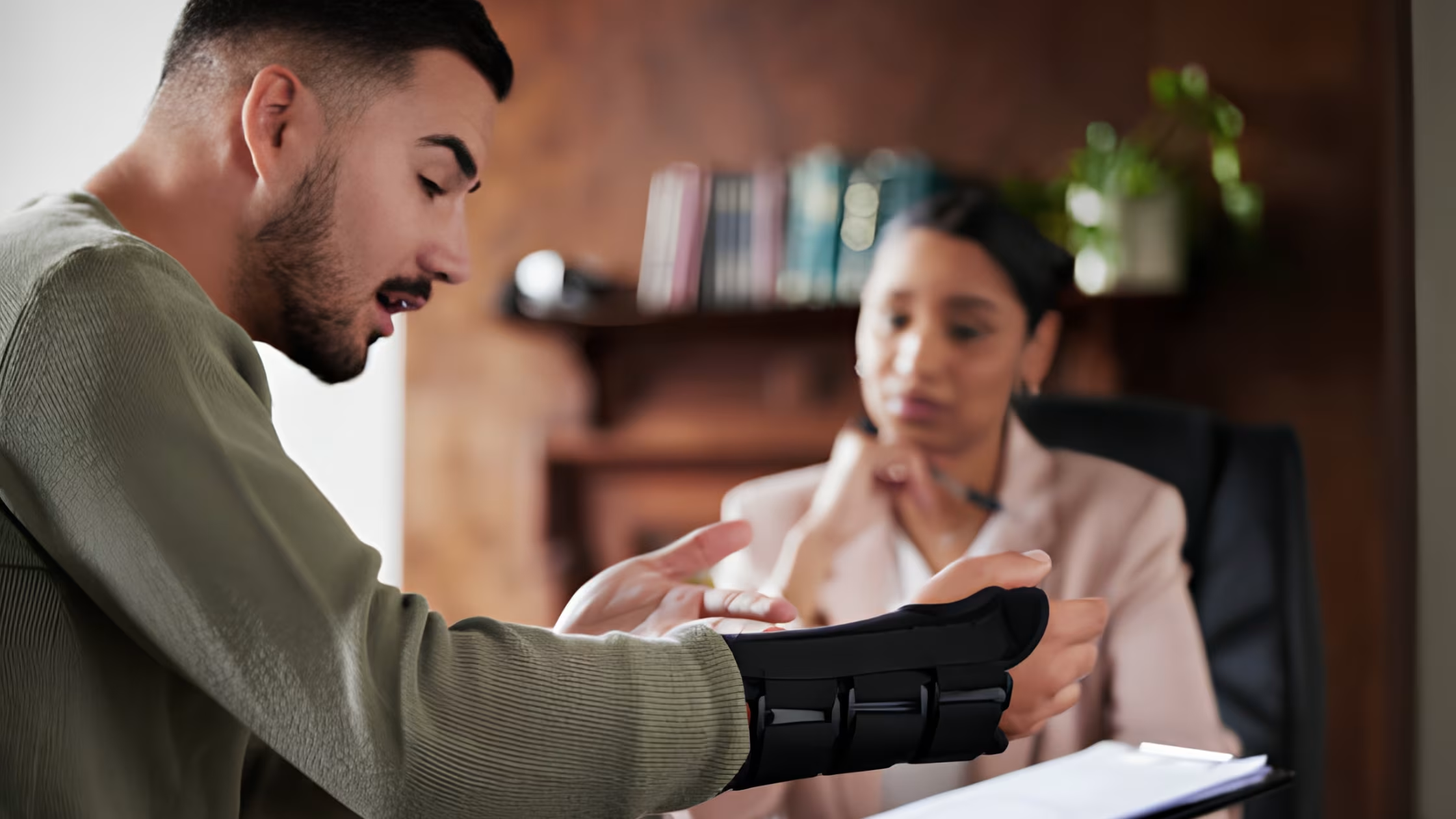
An accident injury does not always follow a predictable recovery timeline. Symptoms can emerge days later, become more severe, or reveal a condition that was not fully understood when the initial claim was made. If your injury gets worse after car accident, you may be wondering whether you can seek additional compensation or whether you have already lost that opportunity. This guide is designed for California accident victims and their families and explains why injuries can worsen, what to do medically and legally, how a pending claim differs from a settled claim, when a claim may potentially be reopened, and how an experienced car accident lawyer can help protect your rights.
Your Injury Can Change. Your Legal Strategy May Need to Change, Too.
Imagine that you walk away from a crash believing you have only minor neck pain. Two weeks later, the pain becomes severe. You develop headaches, numbness, limited movement, or difficulty sleeping. Your doctor orders additional testing and recommends months of treatment.
This is not necessarily evidence that your original injury was unrelated to the collision.
Some accident-related conditions do not become fully apparent immediately. MedlinePlus explains that whiplash pain may take hours or even weeks to develop. The CDC similarly notes that some concussion symptoms may appear immediately while others can take hours or days to appear.
That means a person who initially feels “mostly fine” should not assume the injury will remain minor.
Can an Injury Get Worse After a Car Accident?
Yes. can an injury get worse after a car accident is a medical and legal question that depends on the particular injury, treatment history, and evidence connecting the worsening condition to the crash.
Common examples include:
- Whiplash and other soft-tissue injuries
- Herniated or aggravated spinal discs
- Nerve injuries
- Fractures that require additional treatment
- Traumatic brain injuries and concussions
- Chronic headaches
- Psychological injuries
- Aggravation of a pre-existing condition
For example, whiplash can cause neck stiffness and pain extending into the head, shoulders, arms, or surrounding muscle groups.
Brain injuries require particular caution. The National Institute of Neurological Disorders and Stroke explains that some secondary traumatic brain injuries can develop gradually over hours, days, or weeks following the initial trauma.
The important point is simple: medical deterioration should be evaluated medically first and legally documented second.
What Should You Do When Symptoms Get Worse?
If your condition changes, do not wait until your case is nearly resolved to mention it.
1. Seek appropriate medical care
Tell your healthcare provider exactly what has changed, when it changed, and how the symptoms affect your daily activities.
If you have worsening neurological symptoms, severe headache, repeated vomiting, confusion, seizures, weakness, numbness, difficulty speaking, or other emergency warning signs, seek immediate medical attention.
2. Follow the recommended treatment
Do not stop or alter prescribed treatment simply because an insurance company questions your symptoms.
Medical records can provide a chronological picture of your recovery, setbacks, diagnostic findings, and future treatment needs.
3. Document the progression
Keep records of:
California Courts specifically advise personal-injury plaintiffs to preserve evidence such as medical bills, doctor reports, photographs, witness information, and other evidence supporting the injury and damages.
What If Your Car Accident Claim Is Still Pending?
This is generally the easier situation.
If you have not signed a final settlement release, worsening injuries and newly discovered medical information may be incorporated into the evaluation of the claim, depending on the circumstances.
For example, suppose an insurer offers $25,000 shortly after a collision. You later undergo an MRI that reveals a significant spinal injury requiring surgery. Accepting the original offer and signing a broad release could create serious problems. Before settling, you should understand the full scope of the injury as much as reasonably possible and the legal effect of the proposed release.
California Civil Code §1541 provides that a release can extinguish an obligation, while Civil Code §1542 addresses certain unknown claims. That is why settlement paperwork deserves careful legal review.
Can I Reopen My Car Accident Claim After Settlement?
The question can I reopen my car accident claim does not have a universal yes-or-no answer.
Once a personal injury claim has been settled and released, reopening it can be difficult. A settlement may be a binding agreement that resolves the claims covered by the release.
California courts have repeatedly recognized the importance and enforceability of settlement agreements. In CSAA Insurance Exchange v. Hodroj, the California Court of Appeal affirmed that an agreement to settle a bodily injury claim could be binding even though the parties later disputed the wording of the proposed release.
However, Civil Code §1542 provides an important statutory rule concerning unknown claims: a general release does not automatically extend to claims the releasing party did not know or suspect existed if knowledge of those claims would have materially affected the settlement unless the parties otherwise structure the agreement, including an express waiver of §1542 rights.
California Supreme Court authority also demonstrates that parties can expressly waive §1542 protections in settlement agreements, potentially allocating the risk of future-discovered damages to the settling party.
The practical lesson: never assume that a worsening injury automatically allows a settled case to be reopened or that it automatically prevents one. The exact settlement agreement, release language, circumstances of settlement, and applicable law must be examined.
California's Statute of Limitations Can Also Matter
California Code of Civil Procedure §335.1 generally provides a two-year period for an action seeking damages for personal injury caused by another's wrongful act or neglect.
But calculating a deadline can be more complicated than simply counting two years from the accident. Different rules may apply depending on the defendant, the nature of the claim, governmental involvement, the plaintiff's circumstances, and other facts. Therefore, discovering that your injury has worsened should not lead to unnecessary delay.
What Compensation Could Be Affected?
If the worsening condition is legally attributable to the accident, the increased harm may affect the damages being pursued.
Potential categories can include:
- Additional medical treatment
- Surgery or rehabilitation
- Prescription medication
- Lost wages
- Reduced future earning capacity
- Physical impairment
- Pain and suffering
- Emotional distress
- Future medical expenses
- Assistance or attendant-care needs
California Courts identify ongoing treatment and future problems from an injury among losses that may be relevant to a personal injury case.
The challenge is proving causation. An insurer may argue that the new condition resulted from a later accident, ordinary degeneration, a pre-existing condition, or another unrelated cause. Medical evidence and a well-documented timeline can therefore become critical.
Why Legal Representation Can Make a Difference
When an injury becomes more serious, the case can become more complicated not simply more valuable.
An experienced car accident lawyer can review the medical timeline, insurance communications, settlement documents, applicable deadlines, and evidence supporting the connection between the accident and the worsening condition.
At Ladva Law, cases are prepared with trial in mind rather than assuming that an insurance company's offer will be the final answer. The firm's automobile-accident practice emphasizes investigating the circumstances of a crash, developing evidence, and pursuing compensation when another party is responsible.
With more than 27 years of experience, the firm represents clients throughout Northern California. Its trial-lawyer approach is particularly important when the opposing side disputes the severity, causation, or future consequences of an injury. Learn more through Ladva Law's Automobile Accidents practice page.
When Your Recovery Takes an Unexpected Turn
The hardest part of an accident can be believing you are finally recovering only to discover that your pain is getting worse, your treatment is becoming more intensive, or your future suddenly looks different.
You do not have to navigate that uncertainty alone. At Ladva Law, we have spent more than 27 years representing injured people and preparing cases for the courtroom. We are genuine trial lawyers who actually present cases before juries not simply lawyers who negotiate settlements. If an accident has left you facing a worsening injury, our team can evaluate what happened, what your medical evidence shows, and what legal options may remain available.
FAQ
Q How long after a car accident can an injury appear?
A: There is no single timeline. Some injuries produce immediate symptoms, while others may become noticeable later. Whiplash symptoms can take hours or weeks to develop, and some concussion symptoms may take hours or days to appear.
Q What should I do if my pain gets worse after a car accident?
A: Seek medical evaluation, follow your provider's recommendations, document the changes, and notify your attorney if you have an active claim. Do not ignore worsening symptoms.
Q Is delayed pain after a car accident normal?
A: Delayed symptoms can occur with certain injuries. That does not mean every new symptom is automatically caused by the accident, which is why medical evaluation and documentation are important.
Q Can whiplash get worse after a car accident?
A: Symptoms can develop or become more noticeable after the collision. MedlinePlus reports that whiplash pain may take hours to weeks to develop.
Q can I reopen my car accident claim after signing a settlement?
A: Possibly, but it is difficult and highly dependent on the settlement agreement, release language, applicable law, and facts surrounding the settlement. Do not assume a case can or cannot be reopened without reviewing the documents.
Q Does worsening pain increase my car accident settlement?
A: Potentially, if the worsening condition is medically supported, connected to the accident, and results in legally compensable losses. A larger injury does not automatically guarantee a larger settlement.
Q Should I accept an insurance settlement if I am still receiving treatment?
A: Consider obtaining legal advice before signing a release, particularly when your prognosis is uncertain. A settlement can have consequences for claims arising from future or previously unknown harm.
Disclaimer:
The information provided on this website is for general informational purposes only and does not constitute legal advice. Case studies and past results described on this website are for illustrative purposes only and do not guarantee similar outcomes in future matters. Each legal case is unique and depends on its specific facts and circumstances. Some details in case studies may be modified to protect client privacy. California statutes and case law can change, and whether a claim can be modified, supplemented, or reopened depends on the specific facts and documents involved. Consult a qualified California attorney regarding your individual situation.